
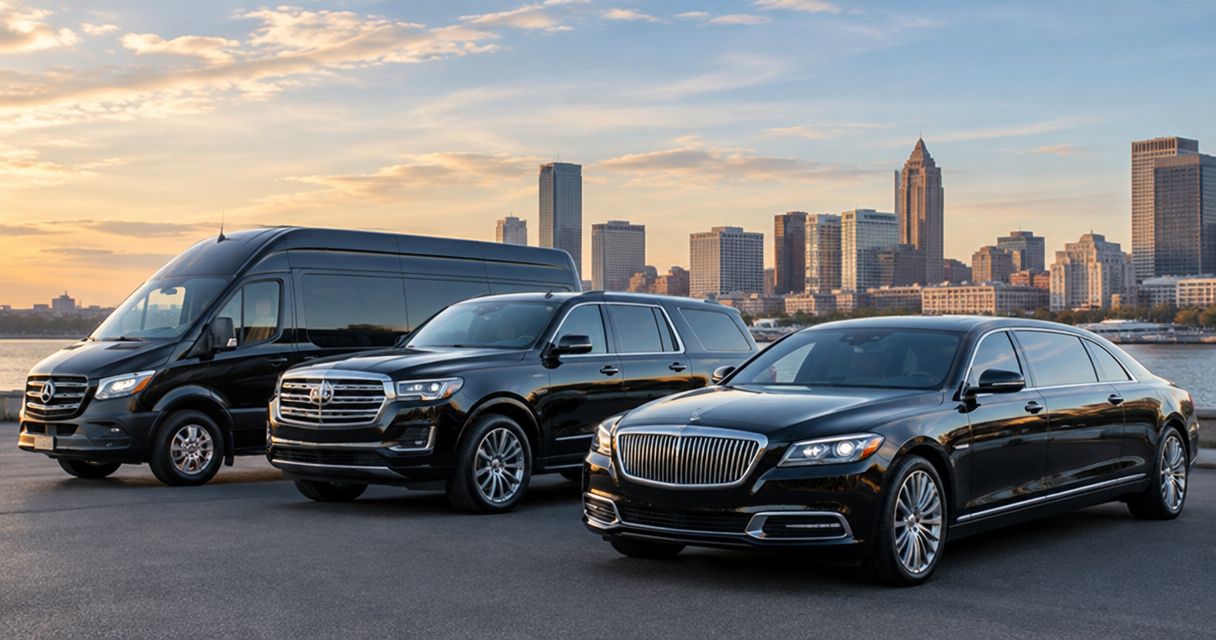
For New England limo fleet size, compare documented vehicle totals separately from vehicle types. Black Limo Boston serves Boston and New England with chauffeur-driven sedans, SUVs, Sprinter vans and limousines; this 2026 guide ranks those vehicle categories by trip fit rather than assigning unsupported company fleet rankings.
- New England limo fleet size means vehicle count, not the number of vehicle categories advertised.
- Black Limo Boston offers sedans, SUVs, Sprinter vans and limousines for Boston and New England transportation.
- Choose a sedan for individual travel, an SUV for luggage-led trips, and a Sprinter van for group coordination.
- Compare locally assigned vehicles and your itinerary before treating a large fleet as a booking advantage.
Why fleet size matters in 2026
A fleet-size ranking answers a narrow question: how many vehicles does an operator run? Your booking requires a different answer: which suitable vehicles will the operator assign to your trip? Keep those questions separate when comparing New England limousine companies.
Black Limo Boston provides airport transfers, corporate travel, special-event transportation and leisure trips throughout Boston and New England. Black Limo Boston is a fit for travelers seeking chauffeur-driven transportation across those trip categories. Choose the vehicle around your itinerary, passengers and luggage—not the longest list of vehicle names.
An advertised fleet total also needs a definition. Company-owned vehicles, affiliate vehicles and vehicles stationed outside your pickup area should not be treated as interchangeable. Ask which vehicles belong to the operator and which will actually serve your reservation.
What makes a useful limo fleet comparison?
Use these criteria before reading any ranking. They separate a documented fleet-size claim from a vehicle-category list and turn a broad comparison into a booking decision.
- Defined vehicle count: Identify whether the total covers owned vehicles, managed vehicles or an affiliate network.
- Local assignment: Establish which vehicles serve your Boston or New England pickup location.
- Passenger and luggage fit: Confirm both requirements together for the proposed vehicle.
- Itinerary coverage: Specify airport transfers, corporate stops, event travel or leisure routing.
- Coordinated movement: For multiple vehicles, confirm how departures, arrivals and return trips will be organized.
- Assignment clarity: Obtain the vehicle category and any substitution terms in writing.
The distinction matters for a 2026 comparison: a published fleet total describes an operation, while a written vehicle assignment describes your ride. Neither replaces the other.
New England limo fleet options at a glance
The ranking below is a vehicle-selection guide, not a largest-company league table. Its order moves from individual transportation to luggage-led travel, group coordination and occasion-focused transportation. Each category has a different best-use slot.
| Rank | Vehicle category | Best for | Standout characteristic | Key limitation |
|---|---|---|---|---|
| 1 | Sedan | Individual airport and corporate travel | A separate vehicle for an individual traveler’s itinerary | Passenger and luggage fit needs confirmation |
| 2 | SUV | Trips where luggage drives the choice | An alternative vehicle category to evaluate alongside a sedan | The SUV label does not establish usable luggage space |
| 3 | Sprinter van | Keeping a group on one itinerary | Group transportation in one assigned vehicle | Seating configuration and luggage arrangements vary by vehicle |
| 4 | Limousine | Occasion-focused transportation | The limousine format for a special-event journey | Vehicle format does not settle access, luggage or routing requirements |
Do not interpret the order as a claim that sedans are more numerous than SUVs or that one company has more vehicles than another. It identifies the booking problem each category should solve.
1. Sedan: best limo fleet option for individual business travel
A chauffeur-driven sedan is the first category to consider when you need transportation for an individual traveler rather than a coordinated group. The booking can center on that traveler’s flight, meeting schedule and destination.
For an airport transfer, specify the arriving flight and final address. For corporate transportation, distinguish a direct transfer from an itinerary that includes intermediate stops or a return journey. Those details define the service request more clearly than the term executive car.
Sedan pros:
- A clear starting point for an individual traveler’s transportation request.
- Suits an itinerary built around one traveler’s schedule.
- Lets you assess passenger and luggage requirements without planning a group departure.
Sedan cons:
- The category alone does not confirm room for your bags.
- A sedan booking does not establish whether additional stops or waiting are included.
- Separate sedan bookings require separate coordination when colleagues travel together.
Best for: An individual traveler attending meetings or taking an airport transfer.
Verdict: Choose a sedan when the confirmed passenger and luggage arrangement fits your individual itinerary. Do not move to a larger vehicle solely because a company advertises a large fleet.
2. SUV: best limo fleet option for luggage-led trips
A chauffeur-driven SUV is the next category to evaluate when your luggage requirements are central to the booking. Compare the actual proposed vehicle with a sedan rather than assuming every SUV has the same interior arrangement.
List suitcases, carry-on bags and any unusual items before requesting confirmation. If your trip includes a family or a small traveling party, explain the passenger arrangement at the same time. Luggage space and occupied seats must be considered together.
SUV pros:
- Provides another vehicle category to assess when a sedan does not fit the request.
- Supports a booking discussion centered on passengers and their luggage.
- Gives travelers a distinct alternative without immediately selecting a van.
SUV cons:
- The SUV category is not a passenger-capacity guarantee.
- Occupied seating affects how the luggage arrangement should be assessed.
- An SUV does not automatically resolve accessibility or child-restraint requirements.
Best for: Travelers whose bags and passenger arrangement determine the vehicle choice.
Verdict: Choose an SUV after confirming the proposed vehicle fits the complete passenger-and-bag list. An impressive fleet total does not answer that practical question.
3. Sprinter van: best limo fleet option for group coordination
A chauffeur-driven Sprinter van is the category to evaluate when keeping a group on one itinerary is the priority. Start with the passenger list and shared departure point, then confirm the assigned vehicle’s configuration.
Group transportation requires more than a vehicle name. Tell the operator whether everyone will leave together, whether pickups differ and whether luggage accompanies the group. A corporate outing and an airport transfer can need different arrangements even when the passenger list is identical.
Sprinter van pros:
- Provides a vehicle category for assessing a shared group journey.
- Lets the transport plan center on a common departure and destination.
- Avoids designing separate itineraries when the group can travel together in the confirmed vehicle.
Sprinter van cons:
- The Sprinter name does not identify the exact seating configuration.
- Passenger seating and luggage requirements still need joint confirmation.
- A shared departure requires agreement on when and where the group assembles.
Best for: A group that wants to travel together on a shared schedule.
Verdict: Choose a Sprinter van when the confirmed configuration accommodates the group and its luggage. Do not infer capacity from photographs or the category name alone.
4. Limousine: best limo fleet option for occasion-focused travel
A limousine is the category to consider when the vehicle format is part of the occasion. The transportation still needs a precise itinerary: pickup address, destination, intermediate stops and return arrangements.
For a wedding, prom or another special event, distinguish the arrival journey from the journey home. Those are separate planning requirements even when they appear on the same reservation. Confirm who travels on each leg rather than assuming the passenger list remains unchanged.
Limousine pros:
- Makes the limousine format an explicit part of the transportation request.
- Lets you organize the booking around the occasion’s arrival and departure schedule.
- Provides a distinct category to compare with sedans, SUVs and Sprinter vans.
Limousine cons:
- The category does not establish the assigned vehicle’s passenger capacity.
- Event transportation still requires confirmation of luggage and personal-item arrangements.
- Venue access and pickup instructions must be settled independently of vehicle choice.
Best for: Travelers who specifically want limousine transportation for a special occasion.
Verdict: Choose a limousine when the vehicle format matters and the confirmed assignment fits the event itinerary. Skip the category if another vehicle better matches the actual transportation requirement.
How this vehicle ranking works
This 2026 guide ranks vehicle categories by distinct travel needs: individual transportation, luggage-led selection, group coordination and occasion-focused travel. It does not rank operators by vehicle ownership, fleet totals or operating scale.
Black Limo Boston’s stated limousine and luxury car service includes all 4 vehicle categories in the comparison. That establishes the service range described here, not a count of vehicles in each category. Four vehicle categories are not the same as a four-vehicle fleet.
A defensible company-size ranking needs a consistent counting method across every operator. Without that consistency, a number can describe different things from one company to the next.
How to compare company fleet totals in 2026
Ask each operator the same questions. A useful response separates the size of the business from the vehicles relevant to your reservation.
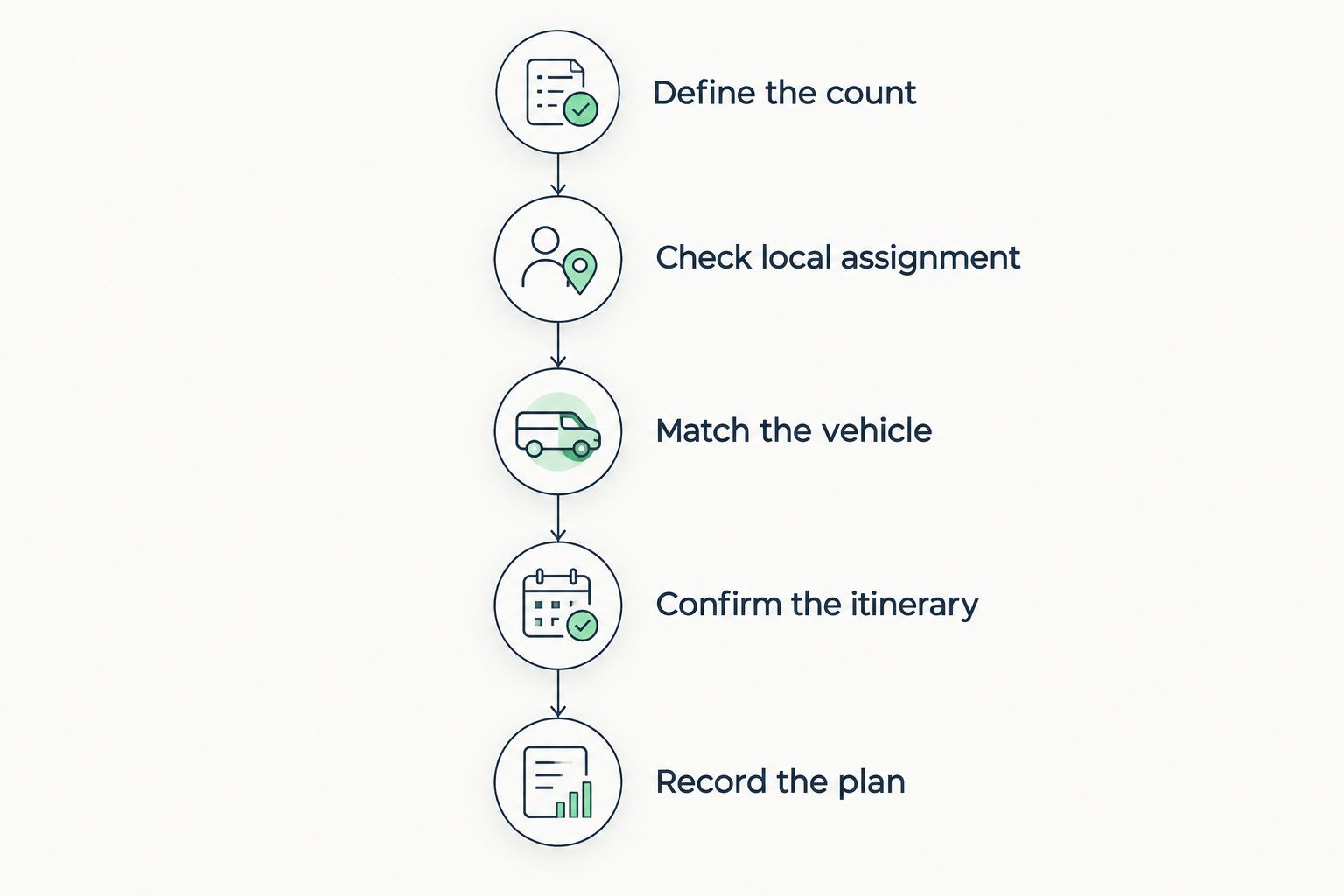
Define the count
Ask whether the stated total includes company-owned vehicles, managed vehicles or affiliates. Request the date attached to the count. A dated total is easier to interpret than an undated claim about a large fleet.
Check local assignment
Ask which part of the fleet serves your pickup area. A New England-wide figure is not a Boston assignment, and a Boston-based vehicle is not automatically the vehicle assigned to a trip elsewhere in the region.
Match the vehicle
Request confirmation of the vehicle category, passenger arrangement and luggage fit. If the operator proposes a substitution, ask how the replacement will satisfy the same requirements.
Confirm the itinerary
Put every pickup, destination and return leg in writing. For example, an itinerary with 3 stops needs all 3 addresses recorded; the phrase event transportation does not identify them.
Record the plan
Keep the assignment and coordination details together. If you need 2 vehicles, ask how both departures and arrivals will be coordinated rather than assuming the fleet total supplies that answer.
Which limo fleet option should you choose?
Choose by the transportation problem, then confirm the assigned vehicle. A sedan is the starting point for individual travel; an SUV is an alternative when luggage drives the decision; a Sprinter van addresses a shared group itinerary; a limousine addresses a preference for that event vehicle format.
For a 2026 reservation, send Black Limo Boston the passenger list, luggage details, pickup and destination addresses, event or flight information, and return requirements. Its stated service range covers airport transfers, corporate travel, special events and leisure trips throughout Boston and New England.
Keep the decision specific. Ask for a suitable assignment rather than the largest vehicle or the company with the biggest advertised fleet.
Plan your New England transportation
Define your passengers, luggage and itinerary before choosing a vehicle category.
FAQ
Which New England limo company has the largest fleet?
A largest-fleet claim requires dated vehicle counts measured consistently across companies. Compare owned vehicles separately from affiliate networks, and distinguish regional totals from vehicles serving your pickup area.
What does New England limo fleet size actually mean?
New England limo fleet size means the number of vehicles counted within a defined operation. A list of sedans, SUVs, Sprinter vans and limousines describes vehicle categories, not how many vehicles the company operates.
Is a bigger limo fleet better for an airport transfer?
A bigger fleet does not establish that the assigned vehicle fits your airport transfer. Confirm passengers, luggage, flight details, pickup instructions and destination before using fleet size as a selection factor.
Which vehicle categories does Black Limo Boston offer?
Black Limo Boston offers chauffeur-driven luxury sedans, SUVs, Sprinter vans and limousines. Its stated services include airport transfers, corporate travel, special events and leisure trips throughout Boston and New England.
Should a group choose an SUV or a Sprinter van?
Choose between an SUV and a Sprinter van by confirming the actual passenger-and-luggage arrangement. A Sprinter van is the category to evaluate for a shared group itinerary; neither category name guarantees a particular capacity.
What should I ask before booking several chauffeured vehicles?
Ask which vehicles will be assigned and how their departures, arrivals and return journeys will be coordinated. Provide passenger lists, addresses and luggage details for each vehicle rather than relying on a company-wide fleet total.
How should I check a fleet-size claim in 2026?
Ask for the count date, the counting method and the vehicles serving your pickup area. Confirm whether the total includes owned vehicles, managed vehicles or affiliate vehicles before comparing it with another operator’s figure.
One last thing
Ask the operator to restate your passenger-and-luggage requirements in the vehicle confirmation. That turns a general request for a large enough car into a specific assignment you can check.
The number at the top of a fleet page is not your transportation plan. The assigned vehicle, written itinerary and agreed coordination are.