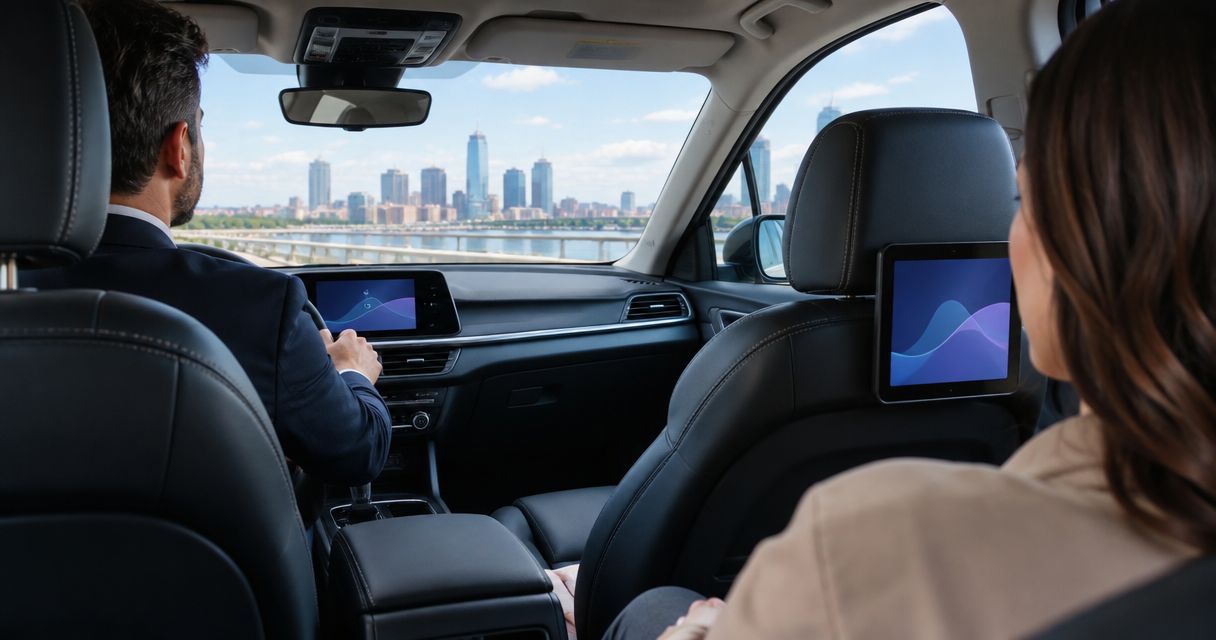

College admissions offices’ car service is prearranged, chauffeur-driven transportation with the aim of keeping recruitment travel, campus visits, and guest arrivals aligned with admissions schedules. This 2026 guide explains how to organize airport transfers, choose vehicles, coordinate campus access, and compare transportation options without treating every journey as the same booking.
- Car service for college admissions offices starts with a confirmed itinerary, campus entrance, and accountable trip owner.
- Blacklimoboston provides chauffeur-driven transportation throughout Boston and New England; confirm admissions-specific requirements before booking.
- Choose airport transfers, recruitment travel, and campus visitor transportation by itinerary rather than vehicle appearance.
- Keep application records out of transportation instructions; share only information needed to complete the journey.
Why car service matters for college admissions offices
Admissions transportation needs a different brief from an ordinary business trip. A visiting counselor needs the correct building entrance, a recruiter needs room for event materials, and a family visiting campus needs an unambiguous pickup arrangement. A campus name alone does not resolve those requirements.
The booking should protect the appointment, not merely connect two addresses. Start with the event’s required arrival time and work backward through unloading, walking, campus access, and the road journey. Keep estimated travel time separate from the time your visitor must be inside the building.
Blacklimoboston provides chauffeur-driven sedans, SUVs, Sprinter vans, and limousines for airport transfers, corporate travel, events, and leisure trips throughout Boston and New England. That service scope is relevant to regional admissions travel; institutional purchasing requirements and individual trip arrangements still need confirmation.
For your 2026 admissions calendar, separate repeatable journeys from exceptions. An airport-to-hotel transfer needs different instructions from a recruitment circuit with changing departure times. Use a shared planning document before selecting a transportation arrangement.
How to organize admissions transportation
Define the trip before choosing transportation
Start manually with a shared spreadsheet or calendar entry. Record who is traveling, why the journey is necessary, where the traveler must arrive, and which office owns the booking. Keep the transportation record separate from application review notes.
Classify each journey as an airport transfer, campus visit, recruitment route, or event movement. These categories clarify the work: an airport transfer has a flight-dependent arrival, while a recruitment route has several appointments and materials to move.
Assign 1 trip owner per itinerary. That person approves changes and communicates the current plan, even when several admissions employees contribute details. This is a recommended operating rule, not a staffing requirement imposed by a transportation provider.
Define success in practical terms. The traveler reaches the designated entrance, the materials arrive with them, and the return journey has an owner. A vehicle reservation alone does not establish any of those outcomes.
- Trip purpose: Identify the appointment or event the journey supports.
- Passenger list: Record traveler names and necessary contact details.
- Campus entrance: Specify the building and permitted arrival point.
- Required arrival: Distinguish appointment time from vehicle arrival time.
- Trip owner: Name the person authorized to approve changes.
Build the schedule around campus access
Check campus instructions directly with the host office. A street address can lead to a service entrance, pedestrian zone, or building frontage where passenger unloading is unsuitable. Record the entrance description in language a visitor can recognize.
For airport arrivals, capture the flight identifier and arrival date rather than relying on a scheduled landing time alone. Ask the transportation provider how the pickup arrangement works, how changes are communicated, and what the traveler should do after collecting luggage.
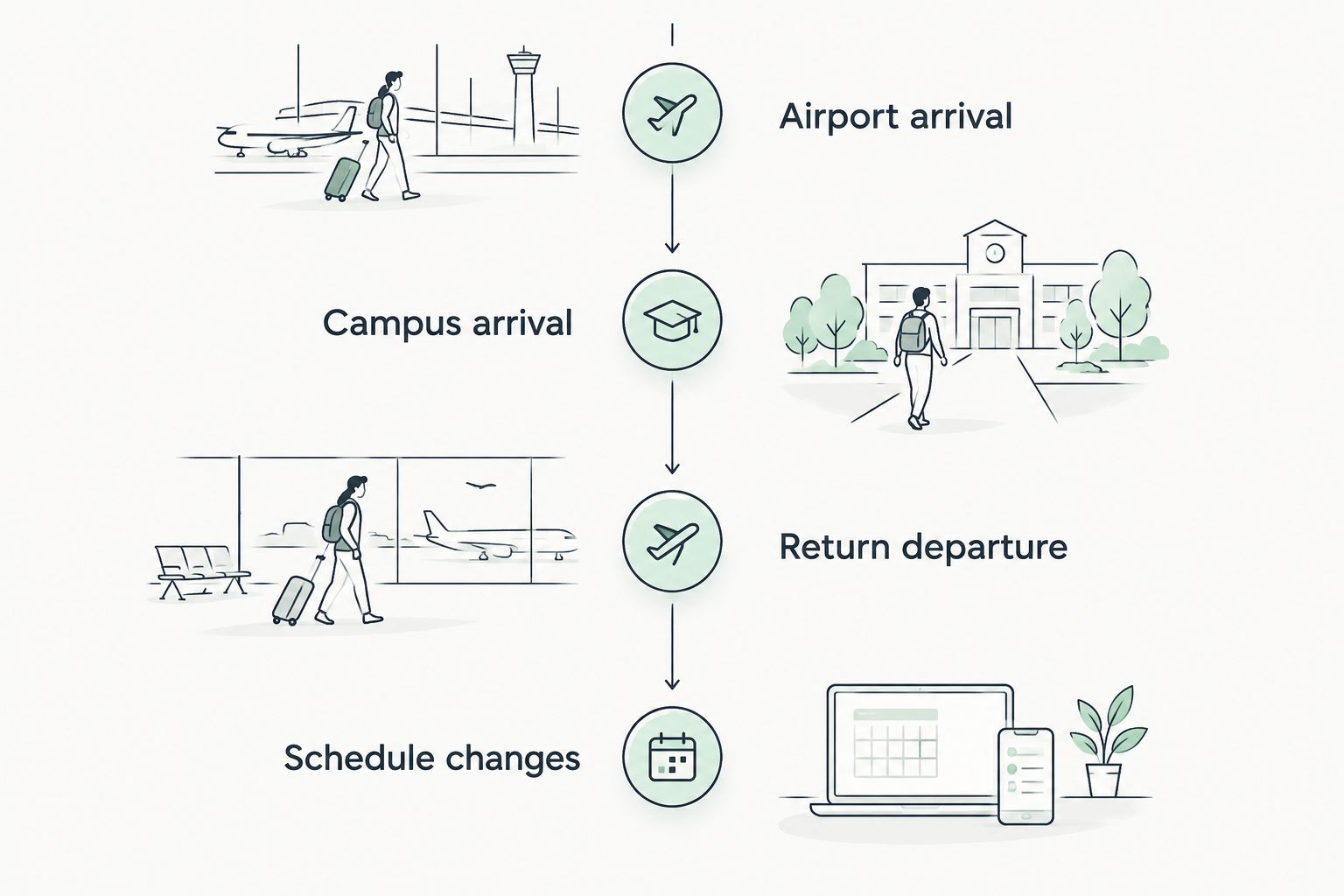
Use 3 itinerary checkpoints: airport arrival, campus arrival, and return departure when a visit includes all of those stages. Verify each checkpoint separately; completing the outbound reservation does not confirm the return plan.
For 2026 visit programs, keep the authoritative itinerary in one shared location. Send a revised version whenever the destination or timing changes, and identify which earlier version it replaces. Do not leave a driver or guest to reconcile conflicting messages.
- Airport arrival: Confirm the flight, meeting instructions, and traveler contact.
- Campus arrival: Confirm the entrance, unloading rules, and host contact.
- Return departure: Confirm the pickup location and person releasing the guest.
- Luggage: Include bags and recruitment materials in the brief.
- Schedule changes: Identify who sends and approves revisions.
Match the vehicle to passengers and materials
List passengers, luggage, recruitment displays, printed materials, and any requested boarding assistance before asking for a vehicle. Do not select a category from passenger count alone. Seating arrangements and luggage space need confirmation for the actual vehicle offered.
Your manual starting point is a passenger-and-materials inventory. A chauffeur-driven service provides an alternative to assigning a staff driver or coordinating separate rides, but the itinerary still needs clear instructions.
Blacklimoboston is best for admissions teams seeking chauffeur-driven transportation across Boston and New England. Its stated vehicle categories include sedans, SUVs, Sprinter vans, and limousines. That range supports a vehicle-selection conversation; it does not establish that every category fits every group or accessibility requirement.
For admissions work, choose utility before presentation. Confirm how event materials will travel, whether the group must remain together, and what happens if the passenger list changes after the initial request.
- Sedan: Best for an individual traveler when the confirmed luggage space fits.
- SUV: Best for a small party whose passengers and bags fit the offered vehicle.
- Sprinter van: Best for group coordination when seating and storage are confirmed.
- Limousine: Best for a deliberately formal event when the layout suits the trip.
- Accessibility needs: Request specific boarding and mobility arrangements before selection.
Assign communication and approval roles
Create a short trip brief that works without an explanation from the person who wrote it. Include the current schedule, traveler contact, campus host, and instructions for reporting a change. Send the same approved version to everyone who needs it.
Separate routine coordination from authority to alter the booking. A visiting guest should know whom to call without becoming responsible for institutional approval decisions. Likewise, a campus host should not assume that a message to the traveler reaches the transportation provider.
Define 2 contact roles: traveler contact and office coordinator. One person can hold both roles on a simple trip, but recording them separately makes responsibility explicit. Confirm the provider’s own communication arrangements rather than assuming a particular dispatch process exists.
Keep transportation instructions narrow. Application documents, evaluation notes, and personal information unrelated to the journey do not belong in a driver-facing itinerary. Follow your institution’s privacy and safeguarding procedures for student visitors.
- Name the traveler contact who can answer day-of questions.
- Name the office coordinator who approves itinerary changes.
- Record the campus host and precise meeting location.
- Specify the communication channel for urgent updates.
- Remove admissions records unrelated to the journey.
Compare service arrangements before confirming
Build a written request from the itinerary rather than asking only for a vehicle category. Include the route, dates, stops, passenger needs, materials, and whether the vehicle must remain with the party between appointments.
Distinguish a direct transfer from a retained vehicle arrangement. For a recruitment day, ask how intermediate stops, waiting, revised departure times, and route changes would be handled. Do not interpret a transfer confirmation as permission to add a circuit of schools.
For 2026 travel planning, confirm institutional purchasing requirements before committing. Ask your finance or procurement team which documentation and approval steps apply. A suitable transportation service and an approved institutional vendor are separate questions.
Blacklimoboston’s stated services cover airport transfers and corporate travel, but admissions teams must confirm their own booking terms, documentation, accessibility needs, and itinerary changes directly. Treat unresolved requirements as open questions, not included features.
- Describe every planned pickup, stop, and destination.
- Ask whether the vehicle leaves or remains between appointments.
- Request the process for schedule and passenger changes.
- Confirm applicable cancellation and waiting terms in writing.
- Check your institution’s approval and documentation requirements.
Review each journey and update the template
After a trip, ask the traveler and campus host about the actual handoffs. Focus on correct entrances, understandable instructions, material handling, and return coordination. A completed ride does not prove the entire visit worked as intended.
Keep your review factual. Record the location of a confusing pickup, the instruction that needed clarification, or the itinerary revision that did not reach everyone. Avoid turning an isolated report into an unsupported judgment about a provider’s overall performance.
Use those observations to revise the booking template for the next 2026 recruitment period. If a building requires a particular entrance description, preserve it. If a stop consistently needs a separate host contact, add that field to the template.
Compare actual outcomes with the original brief, not with expectations nobody documented. This makes future service comparisons more useful than relying on vehicle photographs or a broad impression of the journey.
- Record whether the traveler reached the specified entrance.
- Note any missing or unclear pickup instructions.
- Check whether luggage and event materials traveled as planned.
- Document who received schedule revisions.
- Update the reusable itinerary with verified campus details.
Compare transportation options for admissions travel
Choose an arrangement by the coordination problem it solves. The following options describe operating models, not verified service features of a particular provider. Confirm the details of whichever arrangement you select.
| Option | Best for | Main advantage | Key limitation |
|---|---|---|---|
| Staff-driven institutional vehicle | Recruitment travel with an authorized staff driver | Staff control departure decisions directly | Driving and parking remain staff responsibilities |
| Public transportation | Travelers with a practical route and manageable luggage | Avoids assigning a dedicated driver | The published route does not provide a campus-specific handoff |
| Separately booked on-demand rides | Independent travelers making individual journeys | Each traveler can arrange a separate trip | Group coordination and itinerary consistency need additional oversight |
| Prearranged chauffeur transfer | Airport, hotel, and campus journeys with defined endpoints | Pickup and destination can be specified before travel | Additional stops or waiting require explicit agreement |
| Retained chauffeur arrangement | Recruitment circuits and linked appointments | The itinerary can be discussed as a connected assignment | Vehicle retention and change terms must be confirmed |
For a defined airport-to-campus journey, start by evaluating a prearranged transfer. For a recruitment circuit, evaluate the whole route as one assignment. Neither arrangement removes the need for an office coordinator.
A staff-driven vehicle remains a reasonable option when your institution authorizes the driver and the journey suits that arrangement. A chauffeur service addresses the driving task; it does not replace campus hosting, visitor communications, or institutional approval.
Plan your admissions transportation
Discuss your Boston or New England itinerary, passenger needs, and vehicle requirements.
Common mistakes admissions offices make
Booking the campus name instead of the entrance
A university destination is not a complete arrival instruction. Send the building name, approved unloading location, and host contact together. Ask the host to verify the approach rather than relying on a general campus address.
Treating recruitment materials as ordinary luggage
Event displays and printed materials belong in the initial vehicle brief. Record what travels with each recruiter and identify who unloads it. Confirm the offered vehicle’s storage arrangement before accepting the booking.
Leaving families to interpret separate instructions
A prospective student and accompanying family should receive one clear transportation plan. Specify who is included, where the party meets, and whom to contact. Apply your institution’s visitor and safeguarding procedures rather than assuming the transportation provider supplies them.
Changing an appointment without changing the ride
An updated admissions calendar does not automatically revise a transportation booking. Send the change through the agreed channel and obtain confirmation. Include the return journey whenever an appointment moves.
Choosing presentation before operational fit
A formal vehicle does not resolve unsuitable boarding access, missing storage, or an unclear pickup. Check those requirements first. For your 2026 admissions visits, a confirmed operational fit is more useful than an impressive vehicle description.
FAQ
What is car service for college admissions offices?
Car service for college admissions offices is prearranged, chauffeur-driven transportation supporting recruitment travel, campus visits, airport transfers, and admissions events. The booking should specify the traveler, itinerary, campus entrance, and office coordinator.
What is the best transportation arrangement for visiting admissions guests?
A prearranged transfer is best suited to a visiting guest with defined pickup and destination requirements. Confirm the meeting instructions, luggage needs, campus entrance, and return journey before booking.
Can Blacklimoboston support college admissions travel in New England?
Blacklimoboston provides chauffeur-driven transportation throughout Boston and New England, including airport transfers and corporate travel. Confirm your admissions itinerary, institutional documentation, vehicle requirements, and booking terms directly.
Should admissions offices choose a sedan, SUV, or Sprinter van?
Choose the vehicle after documenting passengers, luggage, recruitment materials, and boarding needs. Confirm the seating and storage of the actual vehicle offered rather than assuming every vehicle in a category has the same layout.
Is a direct transfer better than retaining a chauffeur for recruitment visits?
A direct transfer suits a journey with defined endpoints; a retained chauffeur arrangement suits linked appointments when the agreed service covers the full itinerary. Confirm stops, waiting, and schedule-change arrangements before choosing.
What information should an admissions office send before pickup?
Send the approved itinerary, traveler contact, office coordinator, precise pickup point, and destination entrance. Add flight details and necessary assistance requests, but keep application records and evaluation notes out of transportation instructions.
How should an admissions office handle a flight delay?
Use the provider’s confirmed change procedure and notify the office coordinator. Establish before travel who checks the revised arrival, updates the campus host, and confirms the pickup arrangement.
One last thing
The return pickup deserves its own campus instructions. A guest can arrive at an admissions building and finish the visit somewhere else, such as a tour endpoint or event venue. Do not assume the arrival entrance remains the correct departure location.
Before releasing the final itinerary, ask the campus host to confirm both locations separately. Add a recognizable meeting point and the person responsible for directing the guest there. That final check connects the transportation plan to the actual visit rather than to an address alone.