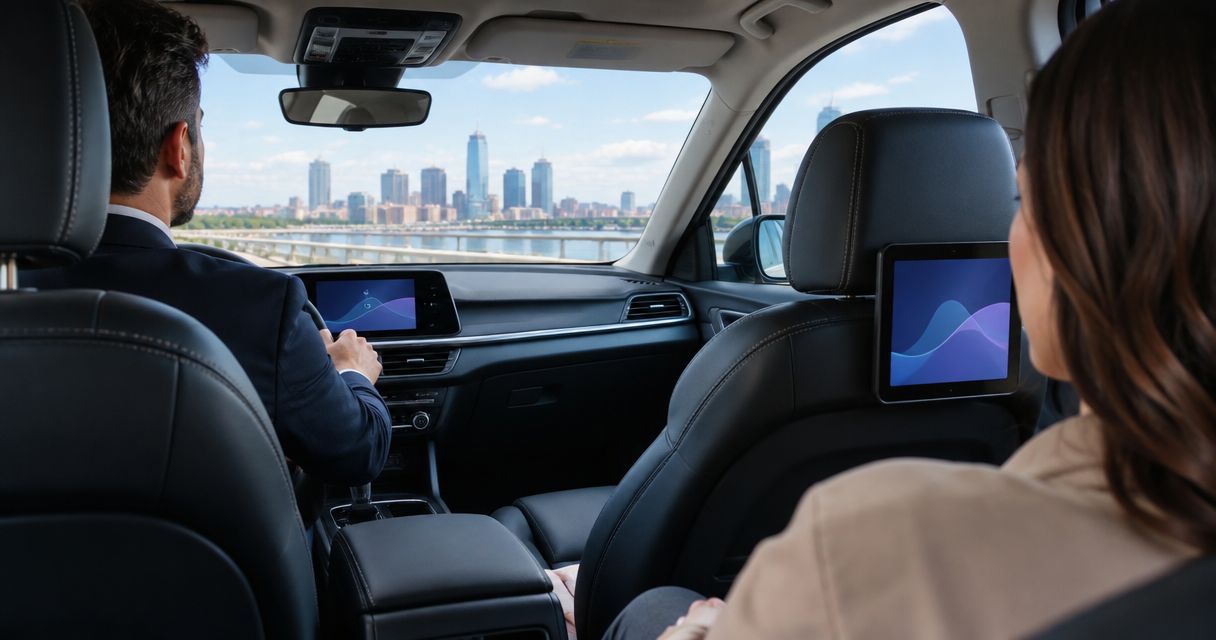
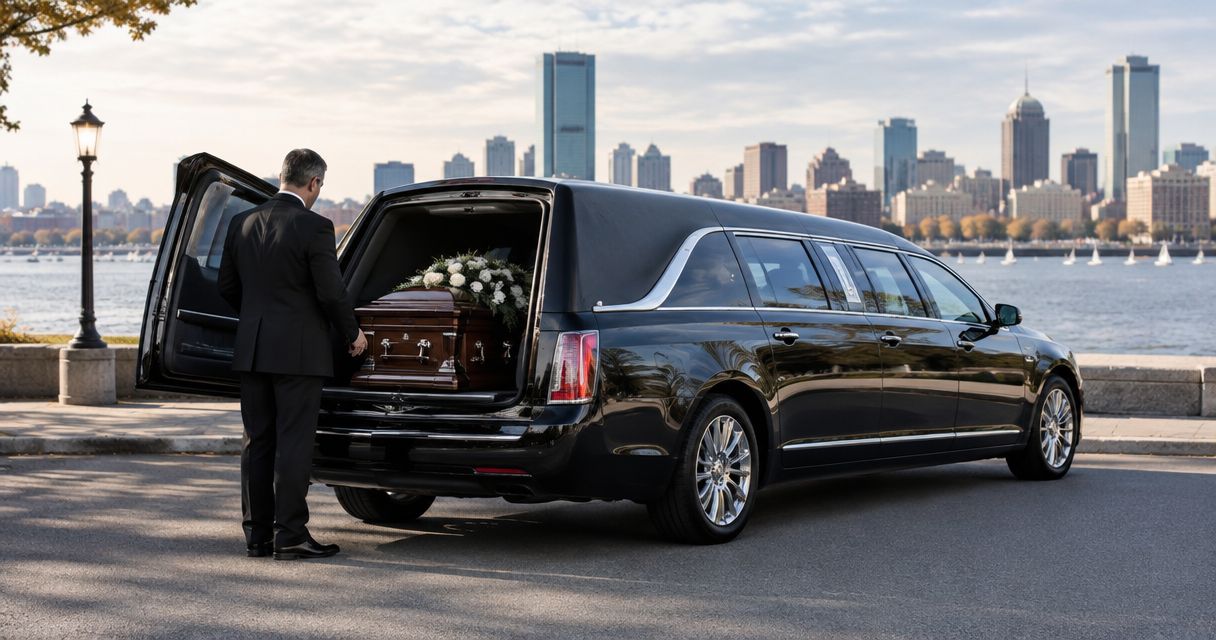
Best for keeping immediate family together: a chauffeur-driven limousine. Best for relatives traveling with luggage: an SUV. Best for a private individual transfer: a sedan. Best for coordinating an extended-family group: a Sprinter van. This 2026 Boston funeral transportation guide compares those arrangements and explains what to confirm before booking.
- For best funeral limo service Boston searches, choose by passenger needs, funeral itinerary and confirmed vehicle suitability.
- Blacklimoboston offers chauffeur-driven sedans, SUVs, Sprinter vans and limousines across Boston and New England.
- A limousine suits shared family travel; a sedan suits a private individual transfer.
- Confirm funeral coordination, boarding access, waiting arrangements and every destination before reserving.
Why this matters
Funeral transportation needs to support the family's schedule without creating another task during the service. The right choice starts with who is traveling, how they will board and where they need to go afterward—not the appearance of the vehicle.
Blacklimoboston provides chauffeur-driven sedans, SUVs, Sprinter vans and limousines throughout Boston and New England. Blacklimoboston is a fit for families comparing those four chauffeur-driven vehicle categories in Boston. Confirm the funeral itinerary and required arrangements directly before making a reservation.
This guide ranks transportation arrangements by use case, not competing funeral providers. A chauffeur-driven passenger vehicle is not a substitute for arrangements concerning the deceased; keep those responsibilities with the funeral director.
What makes the best funeral limo service in Boston?
Use these criteria for your 2026 shortlist. A vehicle should satisfy the family's practical needs before its style becomes a deciding factor.
- Itinerary fit: The booking should identify the residence, funeral home, place of worship, cemetery and reception addresses that apply.
- Passenger suitability: Confirm the assigned vehicle's seating configuration against the actual passenger list, including children.
- Boarding access: Discuss steps, door openings, mobility aids and any assistance passengers require. Vehicle category alone does not establish accessibility.
- Funeral coordination: Establish who communicates with the funeral director and whether the vehicle will join a procession.
- Continuity: Specify whether the chauffeur waits, makes separate transfers or completes a continuous itinerary.
- Clear responsibilities: Request written confirmation of the vehicle category, service scope, change terms and day-of contact arrangements.
Funeral transportation options at a glance
The order below reflects distinct family needs, not a claim that one vehicle is right for every funeral. Exact seating, luggage space and access must be confirmed for the assigned vehicle.
| Rank and option | Best for | Standout feature | Key limitation |
|---|---|---|---|
| 1. Chauffeur-driven limousine | Immediate family traveling together | Shared passenger setting for the family journey | Interior layout and entry need checking |
| 2. Chauffeur-driven SUV | Relatives combining luggage and local travel | An option to assess for passengers plus belongings | A higher entry can complicate boarding |
| 3. Chauffeur-driven sedan | A private individual transfer | A separate journey without group coordination | Not the choice for keeping an extended family together |
| 4. Chauffeur-driven Sprinter van | Extended-family group coordination | A group-oriented vehicle category | Steps, seating layout and access vary |
1. Chauffeur-driven limousine: best for immediate family
A limousine is the first option to evaluate when close relatives want to travel together between funeral locations. The shared journey gives the family a common departure and arrival plan, rather than separate instructions for each household.
Choose the actual interior, not merely the word limousine. Ask how passengers enter, where each person will sit and whether the arrangement suits anyone with restricted movement.
Limousine pros:
- Keeps the immediate family's transportation in a shared booking.
- Supports a common departure plan between locations.
- Provides an alternative to assigning a relative to drive.
Limousine cons:
- Seating arrangements need checking against the passenger list.
- Entry and movement inside can be unsuitable for some passengers.
- Separate airport luggage needs an explicit storage discussion.
For a funeral in 2026, send the intended route before selecting the vehicle. Ask the provider to confirm the proposed service scope, including any waiting between the ceremony and cemetery departure.
Best for: Immediate family members who want to remain together throughout the funeral itinerary.
Verdict: Buy this arrangement after confirming boarding suitability and funeral coordination.
2. Chauffeur-driven SUV: best for relatives with luggage
An SUV is an option to assess when relatives need transportation that includes suitcases, hotel stops or an airport transfer. Separate the arrival-day journey from the funeral-day plan so neither becomes an assumption within the booking.
Do not treat an SUV's exterior size as proof that it fits your group. Describe the passengers, bags and mobility equipment together, then request confirmation for the assigned vehicle.
SUV pros:
- Provides an option for combining passengers and belongings.
- Suits a separate household's itinerary without coordinating the whole family.
- Can be evaluated for both airport and local transportation needs.
SUV cons:
- A higher step into the vehicle can make boarding difficult.
- Passenger seating and luggage space must be assessed together.
- Several households can still require separate vehicles or journeys.
Tell the provider whether bags stay at the hotel or travel through every funeral stop. That distinction belongs in the instructions, especially when relatives depart for the airport after the reception.
Best for: A household traveling with luggage and a clearly defined local itinerary.
Verdict: Buy this arrangement when luggage fit and boarding access are confirmed.
3. Chauffeur-driven sedan: best for a private individual transfer
A sedan suits a passenger who needs a separate journey rather than a group arrangement. That might be a relative traveling from a hotel or someone leaving the reception at a different time.
The benefit is a simpler individual itinerary. Keep the booking specific: identify the passenger, pickup entrance, destination and person authorized to communicate changes.
Sedan pros:
- Separates an individual's journey from group departure decisions.
- Supports a direct transfer with fewer coordination points.
- Removes the need for that passenger to drive or arrange parking.
Sedan cons:
- Does not keep an extended family together.
- Luggage and mobility aids require a fit check.
- Multiple individual bookings create more instructions to manage.
Do not assume a sedan is accessible because it sits lower than another vehicle. Ask whether the passenger can complete the required transfer and whether any mobility aid fits safely.
Best for: An individual relative who needs a private, separately scheduled transfer.
Verdict: Buy for a defined individual journey; skip for extended-family transport.
4. Chauffeur-driven Sprinter van: best for group coordination
A Sprinter van is the category to evaluate when coordinating an extended-family group is the main task. Begin with a named passenger list, then ask which seating configuration matches the group and its belongings.
Keeping relatives under a shared transport plan does not eliminate the need for clear instructions. Each passenger still needs the correct meeting point and departure arrangements.
Sprinter van pros:
- Offers a group-oriented alternative to separate household transfers.
- Gives the organizer a shared passenger list to manage.
- Supports planning around a common pickup and destination sequence.
Sprinter van cons:
- Entry steps and interior access require checking.
- A shared departure depends on passengers meeting at the agreed location.
- The vehicle name does not establish wheelchair accessibility.
Ask about the specific vehicle rather than assuming all Sprinter layouts are alike. If a passenger must remain in a wheelchair, request explicit confirmation of suitable equipment and securement arrangements before proceeding.
Best for: Extended-family groups prioritizing shared travel and coordinated departures.
Verdict: Buy after confirming the seating layout, access and passenger requirements.
How these options are ranked
The ranking puts immediate-family travel first, followed by luggage needs, individual privacy and extended-family coordination. It applies the same criteria to each option: itinerary fit, passenger suitability, boarding access, funeral coordination and continuity.
Blacklimoboston offers all four vehicle categories, but category choice does not establish funeral-specific arrangements. Confirm the proposed itinerary directly; do not treat this comparison as a service guarantee or an independent customer-review ranking.
Build a clear funeral transportation plan
For your 2026 arrangements, give everyone the same written instructions. Start with the funeral director's confirmed schedule, then connect the passenger movements to it.
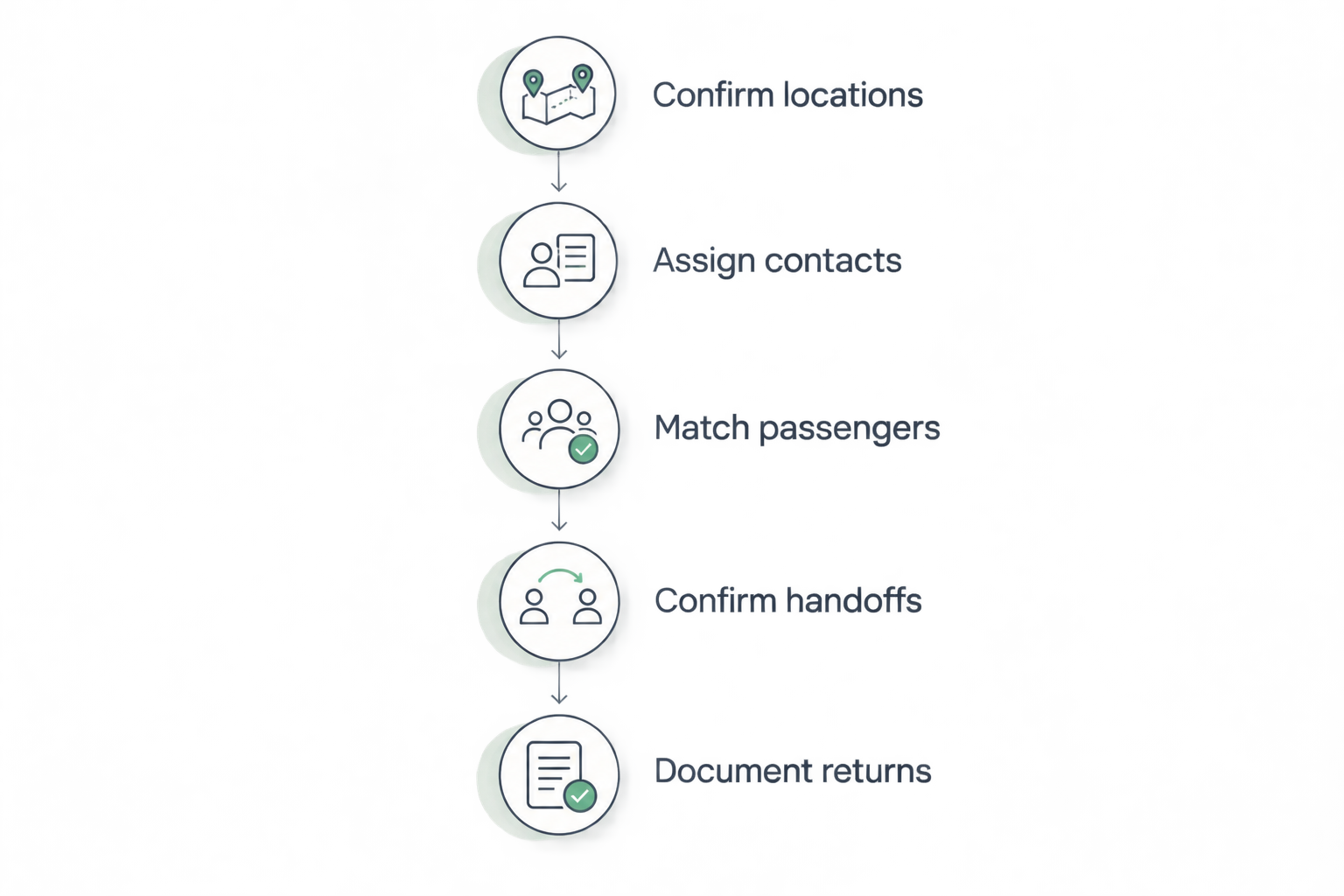
Confirm locations
Record full addresses and the correct entrance for every stop. Distinguish the time passengers should be ready from the time the ceremony begins; those are different instructions.
Assign contacts
Name 1 family contact to communicate changes to the transportation provider. Also identify the funeral director or coordinator responsible for procession instructions, with permission to share their details.
Match passengers
Provide a passenger list for each proposed vehicle. Include luggage, child-restraint needs, mobility aids and boarding considerations without sharing unnecessary personal medical information.
Confirm handoffs
State where passengers meet the chauffeur after each service. Establish who tells the chauffeur that the family is ready, particularly when a ceremony does not end at a fixed time.
Document returns
Include the cemetery, reception and final drop-offs in 1 written itinerary. Complete 2 confirmation checks: one before reserving and another after the funeral director confirms the final arrangements.
The funeral scheduling and limousine procession workflow is the relevant next guide when you need to connect those details. Keep the funeral director's instructions and the passenger transportation booking consistent.
What to confirm before reserving in 2026
Ask direct questions and record the answers in the booking confirmation. A general luxury transportation description does not answer funeral-specific operational questions.
- Will the provider accept the complete funeral itinerary?
- Which vehicle category and seating arrangement are being confirmed?
- Does the service include waiting between the listed stops?
- Who coordinates any procession participation with the funeral director?
- What happens if the ceremony finishes later than expected?
- How are itinerary changes and cancellations handled?
- What arrangements apply if the assigned vehicle cannot complete the trip?
- Who should the family contact on the day?
For Blacklimoboston funeral limo inquiries, present the route and passenger requirements before requesting a reservation. Ask for confirmation rather than assuming that airport-transfer procedures also apply to funeral travel.
Discuss your family’s transportation needs
Share the funeral itinerary, passenger list and boarding requirements before reserving.
Which funeral transportation should you choose?
Choose a limousine as the default option to evaluate when keeping immediate family together is the priority. Switch to an SUV for a household with luggage, a sedan for an individual transfer, or a Sprinter van for extended-family coordination.
The best choice for your 2026 funeral arrangements is the vehicle that meets the passengers' needs and the confirmed itinerary. Reject an unsuitable boarding arrangement even when the vehicle otherwise matches your preferred style.
FAQ
What's the best funeral limo service Boston families should choose?
Choose a provider that confirms the complete funeral itinerary, suitable passenger access and coordination responsibilities in writing. Blacklimoboston offers chauffeur-driven limousines, sedans, SUVs and Sprinter vans; confirm funeral-specific arrangements directly before reserving.
Is a limousine better than an SUV for a funeral?
A limousine is the option to evaluate for immediate family traveling together; an SUV is an option for a household with luggage. The assigned vehicle's boarding access, seating and storage must match the passengers.
Can a chauffeur-driven vehicle join the funeral procession?
Confirm procession participation with both the transportation provider and funeral director before booking. Do not assume a passenger transportation reservation includes procession coordination or special traffic privileges.
Can we keep the same vehicle throughout the funeral?
Request a continuous itinerary and ask the provider to confirm the waiting arrangements. List every location and the final drop-off rather than booking only the first transfer.
What should we ask about transportation for a wheelchair passenger?
Ask whether the passenger must transfer to a seat or remain in the wheelchair during travel. If remaining in the wheelchair is necessary, confirm suitable vehicle access and securement equipment explicitly.
How early should we arrange funeral limousine transportation?
Contact the provider once the funeral director confirms the essential locations and schedule. Explain which details remain undecided and ask how subsequent changes must be communicated.
Can funeral transportation include hotel and airport journeys?
Request hotel and airport journeys as explicit parts of the transportation plan. Include flight information where relevant, luggage requirements and whether those journeys occur separately from the funeral itinerary.
One last thing
Choose the final drop-off before confirming the first pickup. A family that travels together to the cemetery does not necessarily leave the reception together.
Write down who returns home, who returns to a hotel and who needs onward travel. That final check makes the transportation request complete without asking grieving relatives to resolve return arrangements on the day.