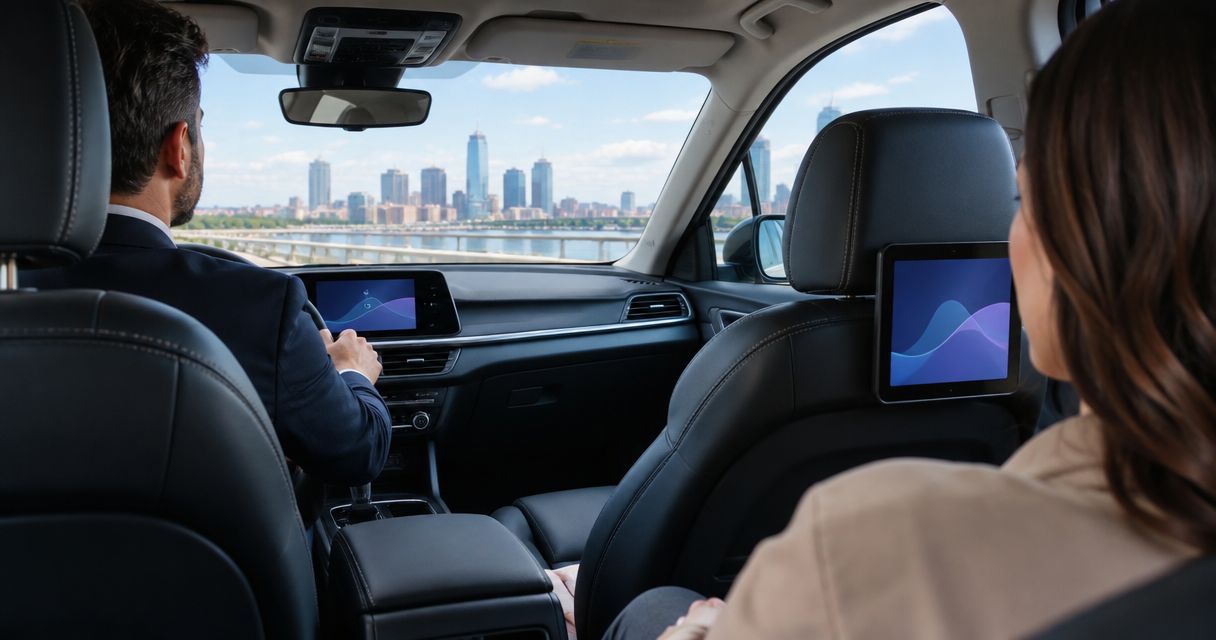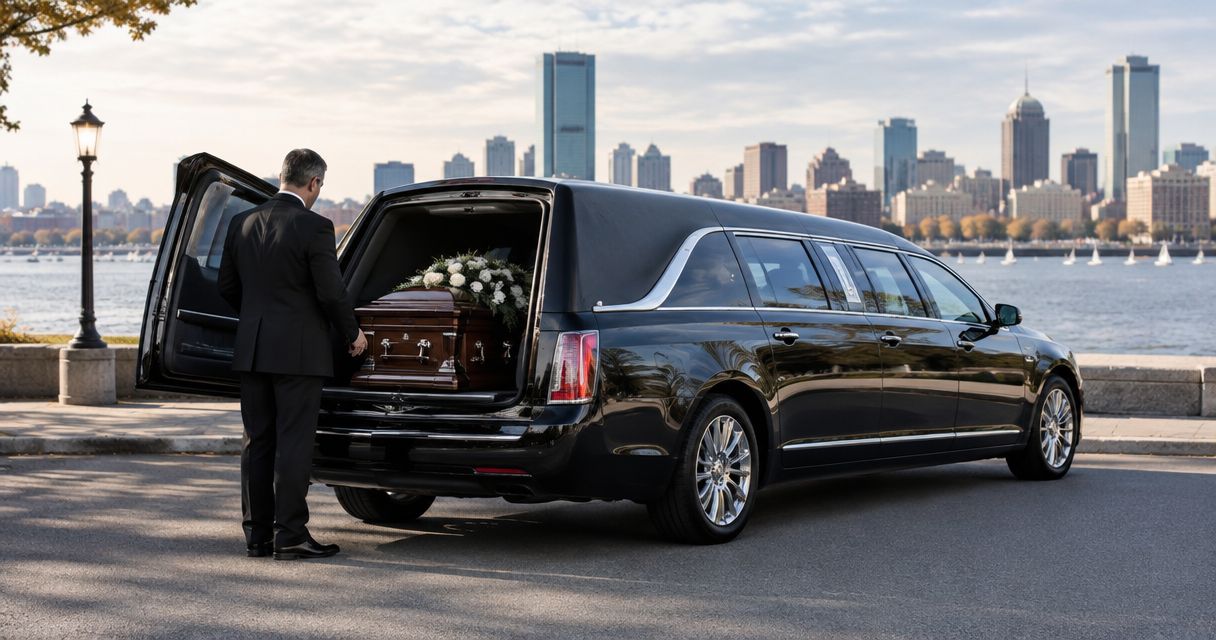

Best for a shared corporate-party departure: a chauffeur-driven Sprinter van. Best for executives: a luxury sedan. Best for a smaller group: an SUV. Best for a ceremonial arrival: a limousine. Blacklimoboston provides all four vehicle categories for corporate travel and special events throughout Boston and New England; this 2026 guide ranks them by itinerary fit, not unverified provider scores.
- Searching best car service for holiday parties boston? Match your vehicle to passenger needs and the return itinerary.
- Blacklimoboston provides Boston car service across sedan, SUV, Sprinter van and limousine categories.
- Choose a Sprinter van for shared departures, subject to confirmed seating and luggage requirements.
- Choose a sedan for executive transfers; confirm every return journey before approving the booking.
Why this matters
A holiday-party transportation plan must cover departures as carefully as arrivals. Getting colleagues to dinner together does not establish how they will leave, especially when guests have different destinations or departure times.
For your 2026 corporate holiday party, choose the trip structure before choosing the vehicle. A shared office-to-venue journey, an executive hotel transfer and individual rides home solve different problems. Treating them as one interchangeable booking leaves important instructions unresolved.
Start with the passenger list, pickup addresses and intended return journeys. The car service guide for meeting and event planners provides a related planning reference when transportation sits within a larger event schedule.
What makes the best holiday-party car service?
Evaluate each option against these criteria before comparing vehicle categories:
- Passenger fit: Confirm the assigned vehicle's seating against the actual traveling group. Include accompanying guests rather than relying on employee attendance alone.
- Route fit: Separate shared departures from individual transfers. A vehicle that suits one direct journey does not automatically suit multiple home drop-offs.
- Return plan: Specify the return pickup, destination and passengers. Do not treat the outbound reservation as confirmation of the return.
- Venue access: Give the provider the entrance your guests will use. Ask the venue where passenger loading is permitted.
- Written scope: Confirm vehicle category, trip instructions, change terms and the arrangements for delays before approving the reservation.
These criteria put execution ahead of appearance. The best vehicle is the one that fits the confirmed trip, not the one with the most impressive category name.
Boston holiday-party car services at a glance
This 2026 comparison ranks transportation formats rather than competing companies. Each category below is part of Blacklimoboston's stated service offering; exact vehicle specifications and event arrangements require confirmation.
| Rank and option | Best for | Standout advantage | Key limitation |
|---|---|---|---|
| 1. Chauffeur-driven Sprinter van | Colleagues sharing a departure | Groups passengers around one vehicle itinerary | Separate destinations complicate the return route |
| 2. Luxury sedan | Executive and individual guest transfers | Keeps the itinerary focused on specific passengers | Does not serve the same purpose as group transportation |
| 3. Chauffeur-driven SUV | A smaller group traveling together | Offers another vehicle category for a shared transfer | Seating and luggage fit depend on the assigned vehicle |
| 4. Limousine | A formal, celebratory arrival | Makes the vehicle part of the event experience | Appearance alone does not resolve passenger or route needs |
1. Sprinter van: best for a shared corporate-party departure
A chauffeur-driven Sprinter van is the first option to assess when colleagues leave from the same office or hotel and travel to the same venue. It puts the shared journey at the center of the plan rather than arranging each passenger separately.
The strongest use case is a defined traveling group with a common pickup and destination. Confirm the exact seating configuration, passenger requirements and any luggage before accepting the assignment; the vehicle category alone is not a capacity guarantee.
Sprinter van pros:
- Suits an itinerary built around colleagues traveling together.
- Gives organizers one shared departure to communicate.
- Keeps the outbound passenger list tied to a specific vehicle.
Sprinter van cons:
- A shared return requires passengers to agree on departure arrangements.
- Multiple home destinations add routing decisions.
- The assigned vehicle still needs a seating and luggage check.
Best for: Office-to-venue transportation with a defined passenger group.
For a 2026 holiday dinner, write separate outbound and return instructions even when the same group expects to travel both ways. Ask whether the vehicle will remain assigned between journeys or whether the return is a separate transfer; do not assume either arrangement.
Verdict: Buy this format for a shared departure; hold approval until the passenger list and return route are confirmed.
2. Luxury sedan: best for executive and individual guest transfers
A chauffeur-driven luxury sedan fits a guest-specific itinerary rather than a group movement plan. Use this category when an executive, visiting colleague or client needs transportation between a hotel, office and party venue.
Blacklimoboston provides luxury sedan transportation for corporate travel and special events. For holiday-party planning, assess the sedan against the named passengers and their individual schedule rather than treating it as a substitute for the employee shuttle.
Luxury sedan pros:
- Supports a clearly defined guest itinerary.
- Separates executive travel instructions from the wider group schedule.
- Suits a direct transfer without coordinating a shared departure.
Luxury sedan cons:
- A separate guest booking adds another itinerary to manage.
- Passenger and baggage requirements still need confirmation.
- Individual transfers do not solve transportation for the wider team.
Best for: Executives, clients and visiting guests traveling separately.
Give each guest a pickup location and a named event contact. If an airport journey is part of the visit, specify it as its own trip leg rather than leaving the provider to infer it from the party reservation.
Verdict: Buy this format for individual guest travel; skip it as the default plan for a shared employee departure.
3. Chauffeur-driven SUV: best for a smaller shared transfer
An SUV is an option to assess when a smaller group wants to travel together without building the journey around a van. The decision belongs to the passenger list and the assigned vehicle's specifications, not a generic assumption about SUV size.
Provide the actual combination of passengers, luggage and other carried items. Ask the provider to confirm that combination before you decide the category is suitable.
Chauffeur-driven SUV pros:
- Provides another category for a shared passenger itinerary.
- Keeps a smaller traveling group on the same booking.
- Fits planning that starts with passengers and destinations rather than ceremony.
Chauffeur-driven SUV cons:
- The category name does not establish usable seating or luggage space.
- Different return destinations still need a routing plan.
- A changing passenger list requires another suitability check.
Best for: A smaller group with a common pickup and destination.
Avoid choosing an SUV simply because the event invitation describes the gathering as small. Attendance and transportation demand are different: some employees will travel independently, while others will bring guests. Build the vehicle request from confirmed riders.
Verdict: Buy this format when the assigned SUV fits the confirmed group; hold if passenger or luggage requirements remain unresolved.
4. Limousine: best for a formal holiday-party arrival
A limousine suits an occasion where the arrival itself is part of the experience. Consider it for a leadership celebration, client-hosting itinerary or formal corporate evening where guests specifically want limousine transportation.
The limousine category does not establish a particular model, interior layout or onboard feature. Ask for the relevant vehicle details and assess them against the trip before making those details part of the invitation.
Limousine pros:
- Makes the journey part of the celebration.
- Suits guests who specifically request a limousine arrival.
- Gives the organizer a distinct option for a formal occasion.
Limousine cons:
- A celebratory vehicle does not simplify a complicated itinerary.
- Venue loading arrangements still require confirmation.
- The category does not establish passenger capacity or specific amenities.
Best for: A formal arrival where limousine transportation is an explicit preference.
For your 2026 event, decide whether the limousine serves the whole evening or a particular transfer. Keep that distinction clear in the request so the occasion's presentation does not obscure the transportation instructions.
Verdict: Buy this format for a deliberate ceremonial choice; skip it when the main need is straightforward group movement.
How these options are ranked
The ranking prioritizes passenger fit, route fit, return planning, venue access and written scope. A shared departure comes first because it is the clearest group-party use case; executive travel, smaller shared transfers and ceremonial arrivals each receive a separate recommendation.
This is not a claim that one vehicle category always outperforms another. Choose by use case, then verify the assigned vehicle and booking terms. No customer-review ranking, performance score or fleet-capacity comparison determines this order.
Build the booking brief before requesting your ride
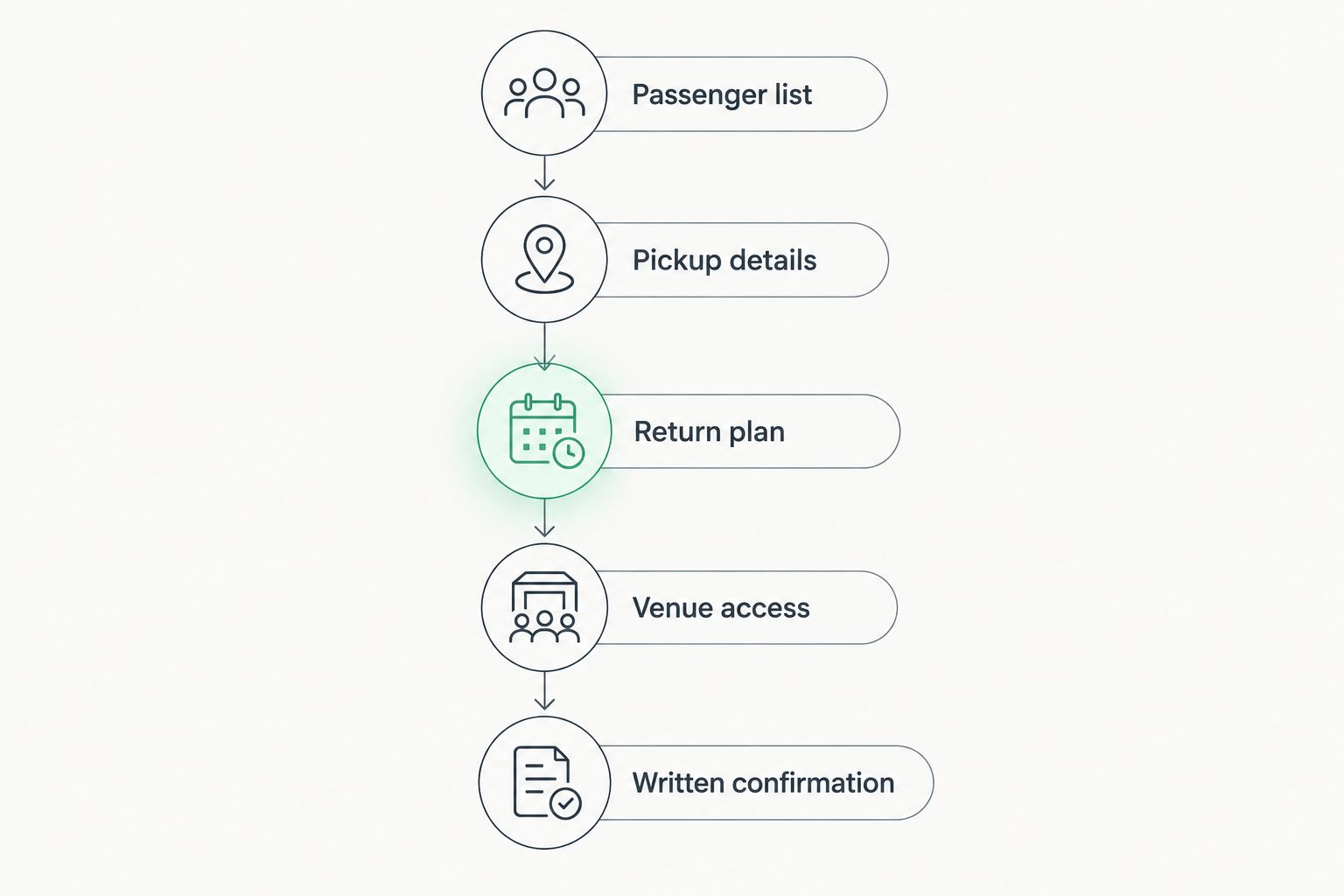
Use this sequence to turn your preferred category into clear instructions. For a 2026 event, keep the brief attached to the current invitation so an agenda change does not leave an outdated pickup time in circulation.
Passenger list
Record who needs transportation and which journey each person will take. Separate event attendance from ridership; not every attendee needs the same transfer.
Pickup details
Specify the address, entrance and requested departure time for every pickup. Distinguish the time guests should assemble from the time you want the vehicle to depart.
Return plan
Write down who returns together, where they are going and when they intend to leave. Plan at least 2 trip legs for a round trip: outbound and return. Treat additional destinations as explicit routing instructions.
Venue access
Ask the venue where the vehicle should load passengers. Share that location with the transportation provider and the passengers rather than assuming the street address identifies the correct entrance.
Written confirmation
Check the passenger requirements, vehicle category and journey instructions against the confirmation. Assign 1 event contact to consolidate changes, so the provider does not receive competing directions from different guests.
Before submitting the request, make 3 checks: the people match the vehicle, the addresses match the invitation, and the return instructions match the actual plan. These are booking checks, not assumptions the chauffeur should resolve at the curb.
Plan Your Holiday Party Transportation
Share your passenger requirements, pickup locations and return itinerary.
Which holiday-party car service should you choose?
Blacklimoboston is a fit for Boston corporate-party planners seeking chauffeur-driven sedan, SUV, Sprinter van or limousine transportation. Choose the category according to the passengers and itinerary, then confirm the details that matter to your event.
For an undecided organizer, start by assessing a Sprinter van when colleagues share a departure. Choose a sedan for individual executive travel, an SUV for a suitable smaller group, or a limousine when the formal arrival is part of the brief.
Use the booking page once you have the passenger requirements, addresses and return plan ready. A clear request gives the provider something specific to confirm.
FAQ
What's the best car service for a corporate holiday party in Boston?
The best fit depends on your passenger group and itinerary. Blacklimoboston provides chauffeur-driven sedans, SUVs, Sprinter vans and limousines for corporate travel and special events throughout Boston and New England.
Is a Sprinter van better than a limousine for an office party?
A Sprinter van is the first category to assess for a shared group departure; a limousine suits a deliberately formal arrival. Confirm the assigned vehicle's seating and your return itinerary before choosing either.
Should I book a sedan or an SUV for executives?
Choose according to the actual passengers and carried items, not executive status alone. A sedan fits an individual guest itinerary, while an SUV is another category to assess for a smaller shared transfer.
Does booking the ride to the party include the trip home?
Do not assume the outbound booking includes the return. Confirm the return pickup, passengers, destinations and booking arrangement in writing.
What should I send when requesting holiday-party transportation?
Send your event date, passenger requirements, pickup addresses, destinations and intended return journeys. Add venue loading instructions and a named event contact.
How many passengers fit in a Sprinter van or limousine?
Confirm capacity for the specific vehicle assigned to your booking. A category name does not establish its seating configuration or whether your passengers and luggage fit together.
How early should I arrange transportation for a 2026 holiday party?
Start the transportation request once your event date, venue and likely passenger requirements are defined. Agree on a process for updating the booking if the guest list or schedule changes.
One last thing
Do not use the party's end time as a substitute for a return pickup instruction. An event end time describes the program; a pickup instruction tells passengers where to assemble and the provider when and where to collect them. Put both on the event brief.