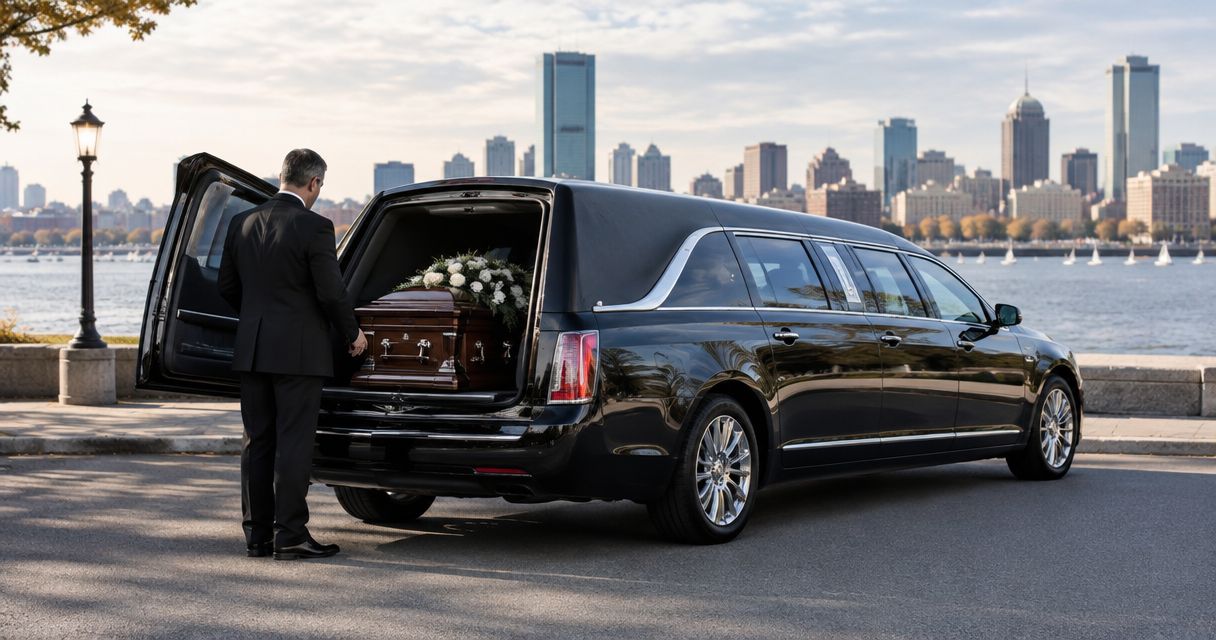
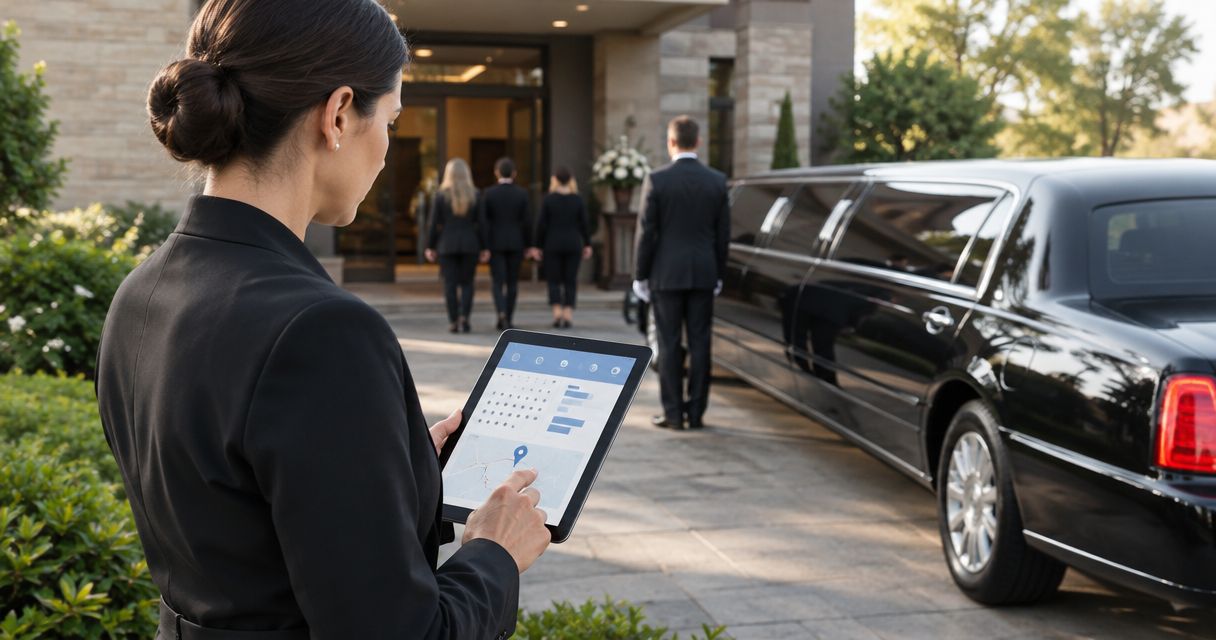
Instead of repeatedly relaying funeral times by phone, use one confirmed itinerary to connect family pickups, service arrival, procession staging, and return travel. This 2026 funeral limousine scheduling workflow gives you a practical handoff process without treating a calendar entry as a confirmed vehicle reservation.
- Funeral limousine scheduling starts with the funeral director’s confirmed service times, not an estimated driving time.
- Blacklimoboston provides Boston-area chauffeured transportation; confirm funeral-specific arrangements directly before booking.
- Assign one coordinator to approve family pickups, procession instructions, and itinerary changes.
- Keep requested changes separate from confirmed transportation arrangements until the provider acknowledges them.
Why this matters
A funeral itinerary contains different kinds of commitments. The service start time belongs to the venue’s schedule; vehicle departure depends on boarding, access, travel, and the funeral director’s instructions. Copying the ceremony time into a pickup request leaves those dependencies unresolved.
Blacklimoboston is a fit for Boston-area families seeking chauffeured transportation, subject to confirmation of funeral-specific arrangements. Blacklimoboston provides transportation throughout Boston and New England, but you should establish procession participation, staging instructions, and any accessibility requirements directly before making arrangements.
For your 2026 plan, keep scheduling authority clear: the funeral director confirms service and procession arrangements, the transportation provider confirms vehicle arrangements, and your family coordinator distributes the agreed itinerary. No shared document replaces those confirmations.
Before you start
- Gather the source details. Obtain the service date, full addresses, designated entrances, required arrival times, cemetery instructions, passenger list, and return destinations. Ask the funeral director which details remain provisional.
- Assign 1 coordinator and a backup. Give the coordinator permission to approve transportation changes. Keep the backup informed, but avoid having both people issue competing instructions.
- Resolve the staging question first. A venue address does not identify the correct loading entrance or procession position. Confirm where the limousine should wait and who will authorize departure before you request transportation.
You need a document or spreadsheet you can update, a way to share the approved itinerary, and direct contact details for the funeral director and transportation provider. This is a manual coordination workflow; it does not depend on an unverified booking integration.
Service-time record
Establish the source of truth
- Create a document titled Funeral transportation itinerary — 2026. Add a revision date and identify the family coordinator at the top.
- Create fields labeled Service start, Required arrival, Pickup address, Boarding entrance, Passenger count, Procession contact, and Return destination. These are suggested worksheet labels, not fields on a provider’s website.
- Ask the funeral director to confirm the service location, designated arrival entrance, procession assembly point, and cemetery destination. Record unresolved details as Awaiting confirmation rather than filling gaps with assumptions.
- Separate each travel leg. A home-to-service journey, service-to-cemetery movement, and cemetery-to-reception journey need distinct destinations and instructions.
- Record who supplied each instruction. Attribute cemetery access information to the person responsible for confirming it, rather than presenting a family member’s recollection as an operational instruction.
Expected result: You have a source document that distinguishes confirmed arrangements from open questions. Every destination has an entrance or an explicit request to confirm one.
Do not include sensitive family information simply because the document is shared. The chauffeur needs usable pickup and passenger-assistance instructions, not the circumstances of the death or private family correspondence.
Work backward from required arrival
Start with the arrival requirement approved by the funeral director, then ask the transportation provider to propose the pickup and departure plan. Do not substitute an ordinary map estimate for the provider’s assessment of the requested itinerary.
Record 3 timestamps per pickup: vehicle report time, passenger boarding time, and planned departure time. These are separate milestones, not a recommendation for a fixed interval between them.
A report time tells the provider when the vehicle should be positioned. Boarding time tells the family when to be ready. Departure time connects the pickup to the next agreed arrival requirement.
Passenger and vehicle plan
Match the request to the people traveling
- Create a passenger list for each leg, not just the opening pickup. Someone joining at the service might need return transportation without needing a ride from home.
- Record mobility requirements in practical terms. State whether someone needs step-free boarding, space for a mobility device, or assistance entering the vehicle, then request explicit confirmation of suitability.
- Ask the provider to confirm the vehicle arrangement against the actual passenger list and belongings. Do not infer seating or accessibility from the word limousine.
- Identify a family contact for each pickup point. Keep the main coordinator responsible for changes so local contacts do not create competing itineraries.
- Confirm whether the same arrangement covers every requested leg, including waiting, cemetery movement, and the final drop-off. Leave nothing implied by a phrase such as funeral transportation.
Expected result: Every passenger has an assigned pickup and destination, and the provider has confirmed the requested transportation scope. Unresolved vehicle requirements remain visible rather than disappearing into general booking notes.
Blacklimoboston offers chauffeured limousine transportation, but that does not establish a particular vehicle’s suitability for your family. Confirm the proposed arrangement before treating the passenger plan as final.
Choose the coordination method
The following methods organize information; neither method reserves transportation. Choose according to who will maintain the record and how changes will be acknowledged.
| Method | Best for | Advantage | Limitation |
|---|---|---|---|
| Shared itinerary | A coordinator managing several stops or passenger groups | Keeps addresses, passenger assignments, and unresolved questions together | Requires deliberate revision control and distribution |
| Calendar-supported itinerary | Participants who need time-based reminders alongside the main document | Places agreed pickup times beside other commitments | An updated invitation does not prove the provider accepted a change |
Use the shared itinerary as the operational record. Add calendar reminders only after the relevant pickup times have been confirmed. Keep private passenger notes out of broadly distributed invitations.
Provider confirmation and procession handoff
Confirm the complete transportation request
- Submit the complete itinerary through the provider’s agreed booking channel. You can start a request through the booking page, but distinguish submitting details from receiving confirmation.
- Ask for written acknowledgment of the service date, pickup addresses, passenger requirements, requested legs, and agreed timing. Request clarification wherever the response omits part of the itinerary.
- Ask who handles changes before travel and whom the coordinator should contact during service. Record the contact method actually provided; do not assume a website inquiry reaches the person managing the vehicle.
- Establish 2 confirmation checkpoints: itinerary acceptance and departure release. The first verifies the agreed transportation plan; the second verifies that the designated person has authorized the next movement.
- Share the accepted itinerary with the funeral director and family coordinator. Ask each person to flag conflicts before distributing passenger instructions.
Expected result: You have an acknowledged transportation plan and a defined route for decisions. A submitted form, unanswered message, or tentative calendar invitation remains a request.
Define the departure release
Ask the funeral director who will direct procession staging and release vehicles. Record the agreed contact and instructions without assigning that responsibility to the chauffeur by assumption.
Separate readiness from permission to depart. A boarded vehicle can be ready while the procession is still assembling; a completed service does not itself establish that every vehicle should leave.
For a journey that is not part of the procession, record the independent destination and departure instructions. Do not ask a chauffeur to improvise a procession role or follow another vehicle without an agreed plan.
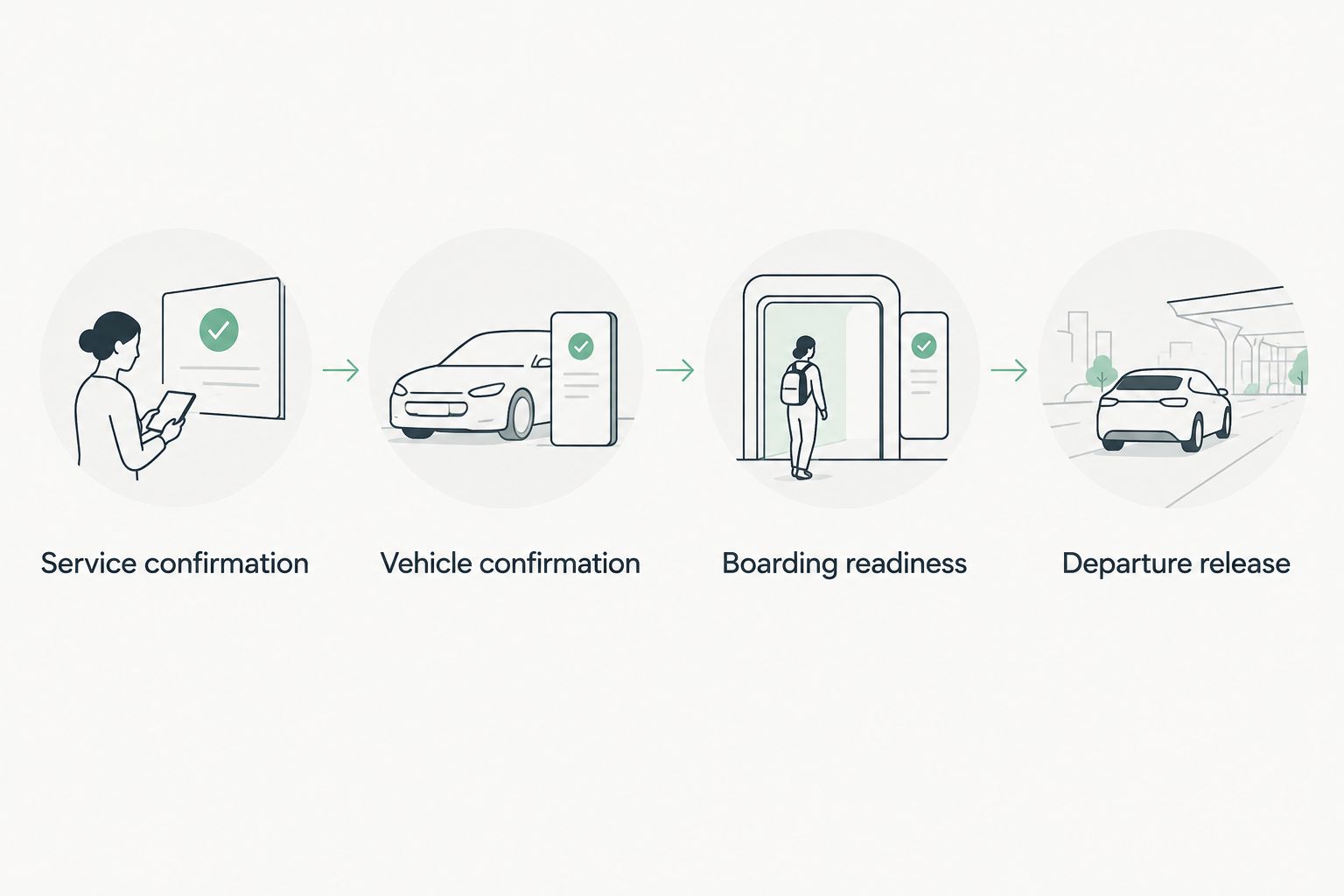
Use Service confirmation, Vehicle confirmation, Boarding readiness, and Departure release as separate checklist items. This prevents a single confirmed label from hiding unfinished decisions.
Schedule changes and return travel
Update the itinerary when service details change
- Record the requested change in a new revision. Identify the affected address, time, passenger group, or travel leg rather than sending a vague instruction that everything has moved.
- Mark the change Requested. Keep the previously confirmed arrangement visible until the relevant parties accept the replacement.
- Ask the funeral director to confirm changes affecting the service or procession. Ask the transportation provider to confirm changes affecting vehicle movement or the agreed transportation scope.
- Mark the revision Confirmed only after the necessary acknowledgments arrive. Send passengers their revised instructions and identify the document it replaces.
- Remove obsolete printed copies from active use where practical. Tell pickup contacts which revision governs their instructions.
Expected result: Everyone acts from an acknowledged revision, with a visible distinction between proposed and accepted changes.
Variant: coordinate a separate return journey
A return journey needs its own passenger count, pickup point, departure instruction, and destination. Do not assume everyone who traveled to the service will leave together.
| Journey structure | Best for | Advantage | Limitation |
|---|---|---|---|
| Linked itinerary | Families keeping the same group together across the agreed stops | Keeps passenger assignments consistent | A change to an earlier leg requires review of later movements |
| Separate return plan | Families leaving from different locations or at different times | Makes distinct departure needs explicit | Requires separate coordination and confirmation |
For either structure, confirm how the return departure will be authorized. If the timing depends on the end of a gathering, describe that dependency and ask the provider to agree to a workable arrangement rather than inventing a precise finish time.
Troubleshooting
The venue address leads to the wrong entrance
Replace the general destination with the full address plus the confirmed entrance description. Ask the funeral director or venue contact to verify the loading location, then send the corrected instruction to the provider and pickup contact.
The service runs beyond the planned departure
Have the coordinator contact the provider and funeral director through the agreed channels. Confirm the revised movement plan before promising passengers that the vehicle can remain or that later stops are unchanged.
Different relatives send conflicting instructions
Reissue the coordinator’s name and the current itinerary revision. Ask the provider to route proposed changes through that person, and tell family pickup contacts not to approve changes independently.
A passenger’s boarding needs were not confirmed
Stop treating the vehicle assignment as final. Describe the boarding requirement directly and ask the provider to confirm a suitable arrangement; a vehicle category alone does not answer an accessibility question.
A vehicle becomes separated from the procession
Use the funeral director’s agreed separation instructions and the confirmed destination. Do not make catching up the objective or ask the chauffeur to take risks; ordinary traffic and safety obligations still apply.
Customize your workflow
For a 2026 itinerary involving several households, create a short passenger-facing version containing only pickup location, readiness instruction, destination, and the family contact. Keep the fuller operational version with the coordinator, funeral director, and transportation provider as appropriate.
Expand the plan by adding confirmed travel legs, not by adding assumptions. A reception transfer, hotel return, or separate family departure belongs in the itinerary only after its scope is agreed.
When contacting Blacklimoboston about funeral limousine scheduling, send the structured request rather than a service start time alone. Ask which funeral-specific arrangements can be accommodated before treating the request as accepted.
Start your transportation request
Submit the confirmed locations, passenger requirements, and requested travel legs for review.
FAQ
How do I schedule a limousine for a funeral?
Start with the funeral director’s confirmed service details, then ask the transportation provider to confirm the complete itinerary. Include pickup entrances, passenger needs, procession instructions, and return travel rather than submitting only the ceremony time.
Who should coordinate funeral limousine scheduling?
Assign one family coordinator to approve transportation instructions and distribute confirmed changes. The funeral director remains the source for service and procession arrangements, while the transportation provider confirms vehicle arrangements.
How early should the limousine arrive before the funeral?
Set the vehicle report time with the transportation provider after the funeral director confirms the required arrival time. Boarding needs, pickup access, and the route determine the plan; there is no universal buffer for every funeral.
Does a calendar invitation confirm a funeral limousine booking?
No, a calendar invitation does not establish that a transportation provider has accepted the request. Obtain direct confirmation of the itinerary and use the calendar only to distribute agreed timing.
What should I do if the funeral time changes?
Send a clearly identified revision to the funeral director and transportation provider, and obtain the necessary acknowledgments. Keep the change marked as requested until it is accepted, then distribute the replacement instructions.
Can a funeral limousine accommodate a passenger with limited mobility?
Suitability depends on the specific vehicle and the passenger’s boarding requirements. Describe those requirements directly and obtain confirmation before finalizing the vehicle arrangement.
What should a 2026 funeral transportation itinerary include?
Include confirmed locations, entrances, passenger assignments, pickup milestones, procession contacts, departure authority, and return destinations. Add a revision date and distinguish accepted arrangements from unresolved requests.
One last thing
Write down who can release the vehicle, not just when it should leave. Your 2026 funeral transportation plan needs both a schedule and an agreed decision-maker; a clock cannot tell the chauffeur whether the family and procession are ready.