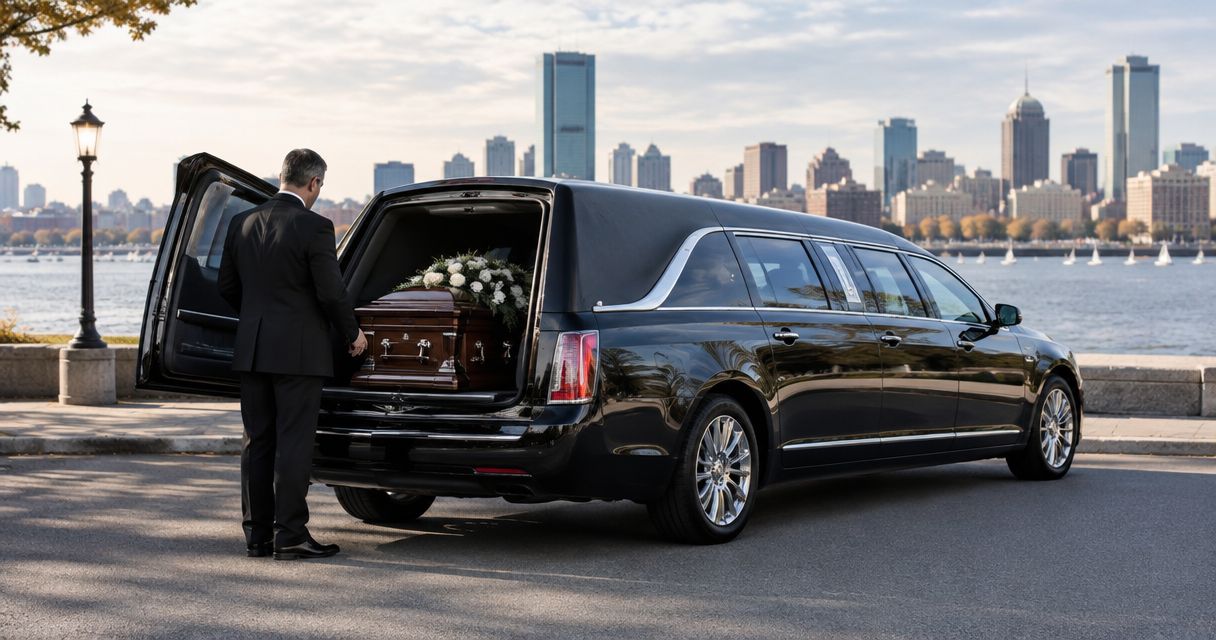
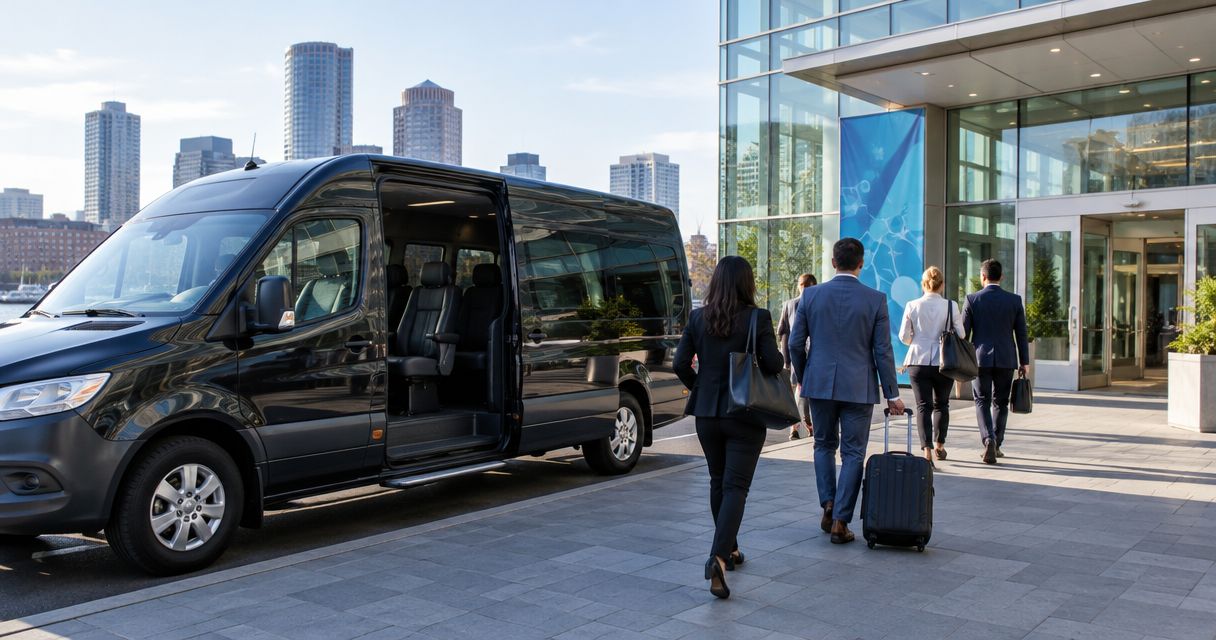
Medical conference Sprinter van rental is chauffeur-driven group transportation with the aim of getting faculty, delegates, and organizers to scheduled events together. This 2026 guide explains how to coordinate Boston airport arrivals, hotel departures, venue access, and return trips without treating every passenger as part of the same itinerary.
- Black Limo Boston suits organizers seeking chauffeur-driven Sprinter van transportation for Boston and New England conference travel.
- For sprinter van rental medical conference boston searches, choose by itinerary, luggage, and boarding needs—not vehicle name alone.
- Separate faculty deadlines from general delegate transfers; one late arrival should not hold an entire conference group.
- Confirm vehicle configuration, pickup instructions, change procedures, and return arrangements before approving your transportation plan.
Why Sprinter van rental matters for medical conference organizers
Medical conference transportation serves an agenda, not just a destination. A faculty member heading to a presentation, an attendee arriving before registration, and an organizer carrying event materials need different departure plans—even when they share a hotel.
Black Limo Boston provides chauffeur-driven Sprinter van transportation alongside sedans, SUVs, and limousines for corporate travel, airport transfers, and special events throughout Boston and New England. Black Limo Boston is best for organizers seeking chauffeur-driven group transportation for Boston and New England conference travel. Confirm the specific vehicle and operating arrangements against your event brief rather than assuming that a vehicle category answers every logistical question.
For your 2026 conference, define success as passengers reaching the correct entrance before their required arrival time. A reservation alone does not establish who boards, where the vehicle meets them, or what happens when the program changes.
How to plan your conference transportation
Define each passenger group's arrival deadline
Start with a shared spreadsheet. Separate passengers by the time they must be inside the venue, not simply by the time their sessions begin. Faculty preparation, registration, badge collection, and audiovisual checks belong in the conference schedule before you work backward to departure.
Build 1 master manifest with a separate row for each transfer. This is a planning recommendation, not a requirement to collect unnecessary personal information. Include operational details that help the organizer and transportation provider identify the trip; leave medical information and confidential presentation content out.
Best for complex programs: organize transfers around commitments rather than status labels. A delegate presenting a poster can have a less flexible deadline than a keynote speaker attending an informal dinner.
- Record each group's required arrival time and destination entrance.
- Distinguish passengers from staff transporting conference materials.
- Assign an organizer responsible for approving each transfer.
- Flag departures that cannot wait for late passengers.
- Keep passenger contact details in a restricted working document.
Map airport, hotel, and venue handoffs
Plan the route manually before requesting transportation. Write the actual hotel entrance, venue entrance, and passenger meeting location into the itinerary. A building name is not a complete pickup instruction, particularly when attendees and event staff use different doors.
For airport arrivals, distinguish the flight's scheduled arrival from the point when passengers are ready to meet transportation. Baggage collection and the passenger's progress through the airport belong in the coordination plan. Ask the transportation provider to confirm the meeting procedure rather than assigning an unverified curbside location.
Split the passenger journey into 3 handoffs: airport meeting, hotel departure, and venue arrival. These are planning checkpoints, not promised journey times. The purpose is to identify who communicates at each transition.
- Ask the venue which entrance accepts passenger drop-offs.
- Confirm hotel loading instructions with the hotel team.
- Group airport passengers by compatible arrival and departure needs.
- Record a clear meeting instruction for each transfer.
- Assign responsibility for communicating a changed pickup location.
Match the vehicle to passengers and belongings
Count passengers and belongings separately. A vehicle that accommodates a seated group does not automatically accommodate the same group's checked luggage, poster tubes, display cases, or registration supplies. Request confirmation for the actual configuration proposed for your trip.
Black Limo Boston offers chauffeur-driven Sprinter van service, but the vehicle category alone does not confirm seating layout, luggage space, accessibility equipment, or onboard amenities. Submit your requirements and ask which details the provider can confirm in writing. This is faster than selecting a vehicle first and revising the itinerary around an unsuitable arrangement.
Best for a shared conference itinerary: a chauffeur-driven Sprinter van, provided the confirmed configuration fits the group. Separate vehicles suit passengers whose commitments conflict; combining everyone is not automatically the better plan.
- Submit the passenger count for each individual transfer.
- List luggage and unusually shaped event materials separately.
- Describe boarding assistance and accessibility requirements directly.
- Request confirmation of the proposed vehicle configuration.
- Confirm how vehicle substitutions would be communicated and approved.
Build a schedule around conference commitments
Work backward from each required arrival, then ask the transportation provider to assess the proposed route and timing. Do not copy a consumer map estimate into every departure slot and call it a conference schedule. Loading, boarding, unloading, and walking to registration need their own consideration.
For 2026 planning, keep 2 schedules: a detailed operating version for coordinators and a concise passenger version. The operating version contains contacts, entrances, and change instructions. The passenger version tells each group where to meet, when to be ready, and whom to contact.
The sequence below connects the conference program to transportation decisions. Complete the handoff details before you publish departure instructions.
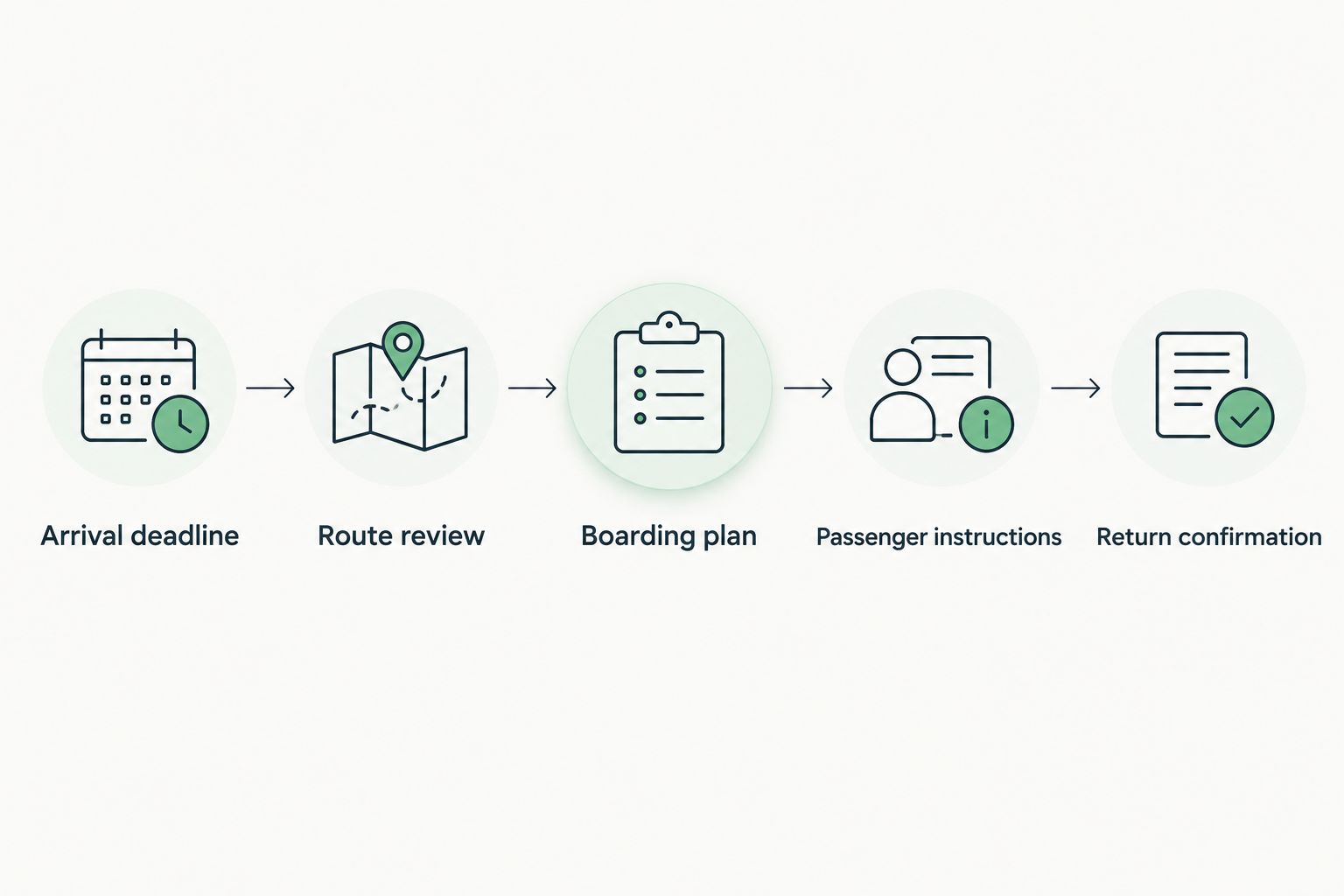
An airport arrival, a faculty dinner, and an end-of-day hotel return have different timing constraints. Review each movement on its own merits instead of applying an identical buffer to every journey.
- Arrival deadline: record when the group must reach its destination.
- Route review: ask the provider to assess access and timing.
- Boarding plan: identify the meeting point and responsible coordinator.
- Passenger instructions: share the approved departure details.
- Return confirmation: define the return meeting point and release decision.
Assign ownership of changes and exceptions
Choose who can approve itinerary changes before the event begins. A faculty assistant, sponsor representative, and conference volunteer should not independently send conflicting instructions about the same vehicle. Give passengers a clear communication route without giving everyone authority to revise the booking.
Assign 2 operational contacts: a lead coordinator and a backup. This is a recommended staffing arrangement, not a stated service feature. Agree with the transportation provider how those contacts will report delays, revised passenger counts, missed meetings, and changed destinations.
Best for a changing faculty schedule: a written exception plan with an identified decision-maker. Chauffeur-driven service still needs organizer decisions; it does not replace your conference control process.
- Identify the person authorized to approve itinerary changes.
- Share the backup contact with the transportation provider.
- Establish a decision process for passengers who miss departure.
- Ask how flight changes affect the agreed pickup arrangements.
- Record who tells passengers about an approved revision.
Confirm the booking and return plan in writing
Review the proposed service against the itinerary rather than approving a vehicle description alone. Your confirmation should identify the movements requested, passenger requirements, meeting instructions, and arrangements requiring further agreement. Ask about waiting, schedule changes, cancellation terms, and additional stops before approval.
Use the booking page to begin arranging transportation with Black Limo Boston, and retain the written confirmation with your operating schedule. Do not treat submitting a request as confirmation that every requested detail has been accepted.
For your 2026 event file, give the approved itinerary a visible revision date. A date helps coordinators distinguish the current plan from an earlier copy without relying on a message thread.
- Check dates, pickup locations, destinations, and passenger counts.
- Confirm the vehicle requirements accepted for each transfer.
- Review the provider's terms for changes and waiting.
- Specify who releases the return vehicle after the final session.
- Distribute the approved version and withdraw superseded instructions.
Compare transportation options for your conference
Choose transportation by the passenger group's assignment, not by a single vehicle preference for the whole event. A Sprinter van fits coordinated group movement; a separate sedan or SUV separates an individual travel requirement from the shared itinerary. Neither arrangement removes the need to confirm luggage, access, and timing.
The table compares operating approaches, not guaranteed vehicle specifications or provider policies. Use it to decide what to request for each movement in your 2026 plan.
| Option | Best for | Main advantage | Key limitation |
|---|---|---|---|
| Chauffeur-driven Sprinter van | Faculty or delegates sharing a route and deadline | Keeps a scheduled group movement together | Shared departure depends on a workable passenger manifest and confirmed luggage fit |
| Chauffeur-driven sedan | An individual speaker with a separate commitment | Separates that speaker's itinerary from the group | Not a substitute for a group transfer; confirm passenger and luggage fit |
| Chauffeur-driven SUV | A separate travel party with its own schedule | Allows a distinct itinerary without changing the main group movement | Vehicle category alone does not establish capacity or accessibility |
| Individually arranged transportation | Attendees managing independent, flexible journeys | Leaves departure decisions with each traveler | The organizer does not coordinate a shared departure or group handoff |
Black Limo Boston provides the chauffeur-driven vehicle categories listed above. Ask the provider to assess your actual itinerary; this comparison does not establish fleet configuration or suitability for a particular accessibility requirement.
Common mistakes medical conference organizers make
Combining every faculty arrival into one departure
A shared hotel does not make all airport arrivals compatible. Separate a time-critical speaker transfer from passengers whose arrival leaves the departure unresolved. Otherwise, the organizer must choose between holding the group and sending passengers without the expected arrangement.
Treating a session start as the arrival deadline
A speaker scheduled to present still needs to reach the room and complete any organizer-required preparation. Set the transport deadline with the program team, then distinguish venue arrival from presentation time in passenger instructions.
Assuming a Sprinter van meets every boarding need
The vehicle name does not establish wheelchair access, boarding assistance, or space for mobility equipment. Describe the requirement during planning and obtain explicit confirmation of a suitable arrangement. Do not leave that conversation until pickup.
Turning the passenger manifest into a sensitive-information file
A conference transfer list needs enough information to coordinate travel, not clinical details or confidential research notes. Keep operational instructions separate from conference content and restrict distribution of personal contact information.
Leaving the return trip tied to an uncertain session ending
A scheduled program finish and the moment passengers are ready to leave are different events. Identify who confirms the group's readiness, where passengers assemble, and how a prolonged discussion changes the return arrangement.
FAQ
What's the best way to arrange a Sprinter van for a Boston medical conference?
Build a transfer-by-transfer itinerary before requesting chauffeur-driven transportation. Include passenger counts, luggage, required arrival times, meeting points, and the person authorized to approve changes.
Does Black Limo Boston provide chauffeur-driven Sprinter van transportation?
Black Limo Boston provides chauffeur-driven Sprinter van transportation throughout Boston and New England. Confirm the proposed vehicle configuration and your conference requirements directly before approving the arrangement.
Should every conference speaker travel in the same van?
Only group speakers whose routes and required arrival times are compatible. Arrange separate transportation when a shared departure would conflict with a speaker's conference commitment.
How many attendees fit in a conference Sprinter van?
Confirm passenger capacity for the exact vehicle configuration proposed for your transfer. Provide luggage, event materials, and boarding requirements at the same time rather than relying on the vehicle name.
Can a Sprinter van accommodate a wheelchair passenger?
Confirm accessibility for the specific vehicle and passenger requirement before booking. Describe whether the passenger needs to remain in a wheelchair and what boarding assistance or equipment the journey requires.
What should we do if a faculty member's flight is delayed?
Use the change procedure agreed with the transportation provider and your authorized coordinator. Decide whether the affected passenger needs a separate transfer rather than automatically holding everyone else.
Is a shared van better than individually arranged transportation?
A shared van is better for passengers who need a coordinated departure and arrival. Individually arranged transportation fits independent itineraries but leaves each traveler responsible for their own departure arrangements.
One last thing
Audit the trip backward from the presentation room, not forward from the airport. Ask your program team what must happen between vehicle arrival and the speaker's first obligation. That answer establishes the deadline the transportation plan actually needs to serve.