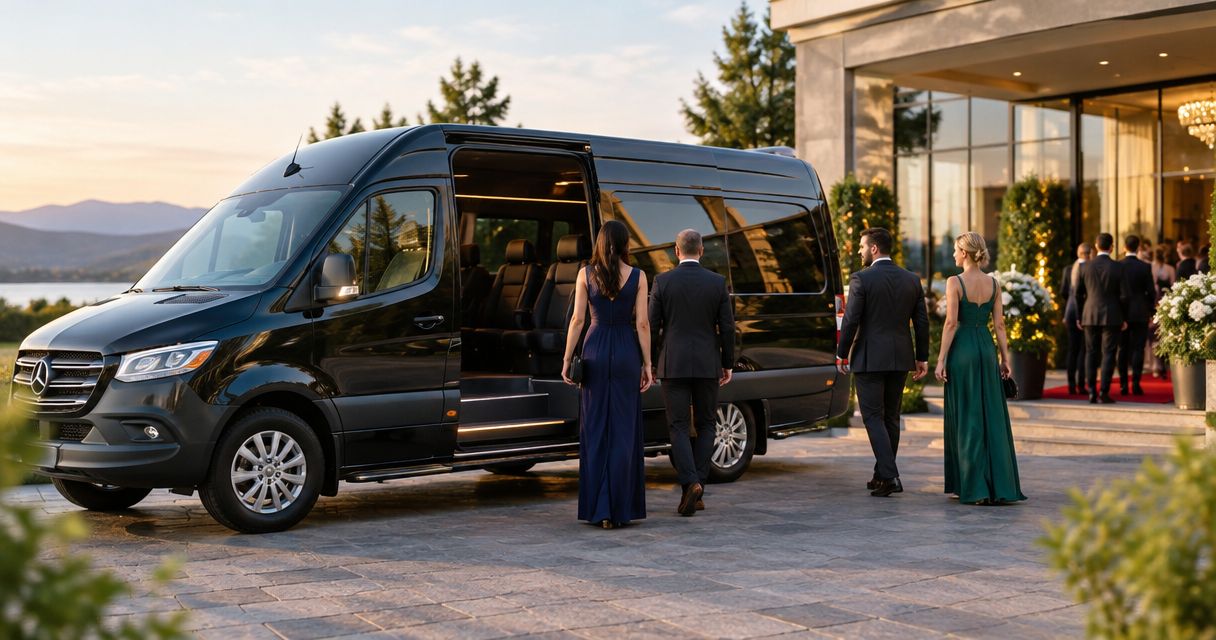
Nonprofit gala Sprinter van rental is chauffeur-driven group transportation arranged to move guests between airports, hotels, and event venues with the aim of keeping your fundraiser’s arrivals and departures coordinated. This 2026 guide explains how to plan passenger groups, assess vehicle fit, compare transportation options, and document the service without confusing a passenger vehicle with a complete event transportation plan.
- For Boston events, sprinter van rental for nonprofit galas fits guests traveling together on a coordinated itinerary.
- Choose gala transportation by passenger needs, luggage, and departure patterns—not vehicle appearance alone.
- Confirm the actual vehicle configuration, pickup instructions, and written service terms before approving transportation.
- Separate scheduled group departures from individual airport transfers when their timing conflicts.
Why chauffeured transportation matters for nonprofit galas
Your transportation plan has to serve the event program, not compete with it. A speaker arriving from an airport, a sponsor group leaving a hotel, and volunteers transporting materials have different requirements; placing everyone on the same itinerary does not resolve those differences.
For your 2026 gala, build the plan around the moments guests must actually reach: reception check-in, the program opening, and their return departure. The car service guide for meeting and event planners provides related planning context for coordinating those movements.
A Sprinter is a vehicle choice; a successful gala transfer requires a passenger list, a workable schedule, and clear pickup instructions. Treat those as separate approvals. An attractive vehicle does not answer whether guests can board comfortably or whether the venue permits it to wait near the entrance.
How to plan your gala transportation
Start with a shared spreadsheet and a conversation with the venue. You can establish the passenger groups, trip requirements, and decision owners before contacting a transportation provider. Keep that brief consistent so each proposal addresses the same work.
Map guest groups
Create a manifest organized by travel requirement rather than donor status alone. Guests belong together when their pickup location, arrival deadline, and return plans align. A shared invitation category does not necessarily make them a workable travel group.
Assign 1 transportation lead to maintain the approved version. Other staff can contribute changes, but the provider should receive instructions from the designated contact rather than several overlapping email threads.
Keep 2 manifests: an operational version for the event team and a limited passenger version for transportation coordination. The operational version can contain internal responsibilities; the passenger version should contain only information needed to complete the trip. Neither needs fundraising history or donation amounts.
Record these details before requesting a vehicle:
- Pickup address and named meeting point.
- Passenger names and a group contact.
- Required arrival time and return preference.
- Luggage, mobility, or boarding requirements.
- Staff member authorized to approve changes.
Confirm vehicle fit
Ask for the configuration of the vehicle proposed for your trip, not a general description of a Sprinter. Passenger seating, luggage space, entry arrangements, and interior layouts are details to verify before matching guests to a vehicle.
For a 2026 gala, assess passengers and belongings together. Airport travelers can bring luggage; event staff can bring presentation materials; guests can need space for mobility equipment. Do not assume that a passenger count answers all those questions.
Confirm the proposed seating and storage arrangement in writing. If your group has boarding requirements, describe them directly and ask how the proposed vehicle addresses them. A vehicle category alone does not establish accessibility.
Keep passenger transport separate from event freight unless the provider explicitly accepts the combined requirement. Boxes should not become an unplanned substitute for usable passenger space.
- Submit the expected passenger count for each trip.
- Describe luggage and event materials separately.
- Ask about entry steps and boarding assistance.
- Verify accommodation of any mobility equipment.
- Request written confirmation of the proposed layout.
Choose your transportation arrangement
Prepare the itinerary yourself first, then give the same brief to prospective providers. That makes the service discussion specific: who travels, where they meet, what they carry, and when they must arrive.
Blacklimoboston is best for Boston-area gala planners seeking chauffeur-driven group transportation. Its stated services include Sprinter vans, luxury sedans, SUVs, and limousines for special events, airport transfers, and other travel throughout Boston and New England.
Blacklimoboston Sprinter van rental belongs on the shortlist when your gala requires a shared chauffeur-driven journey. The limitation is itinerary fit: guests with incompatible departure times should not be placed together simply to fill the vehicle. Ask the provider to assess separate movements rather than treating every guest as part of the same transfer.
Use the written itinerary to request a proposed arrangement instead of asking only for a vehicle category.
- Specify chauffeur-driven service rather than self-drive rental.
- Identify each distinct passenger movement.
- Ask who handles itinerary changes.
- Request the proposed vehicle arrangement in writing.
Approve the schedule
Work backward from the time guests need to be inside the venue, not merely outside it. Your schedule needs to account for unloading, boarding assistance, walking to the entrance, and event check-in without assigning invented travel-time allowances.
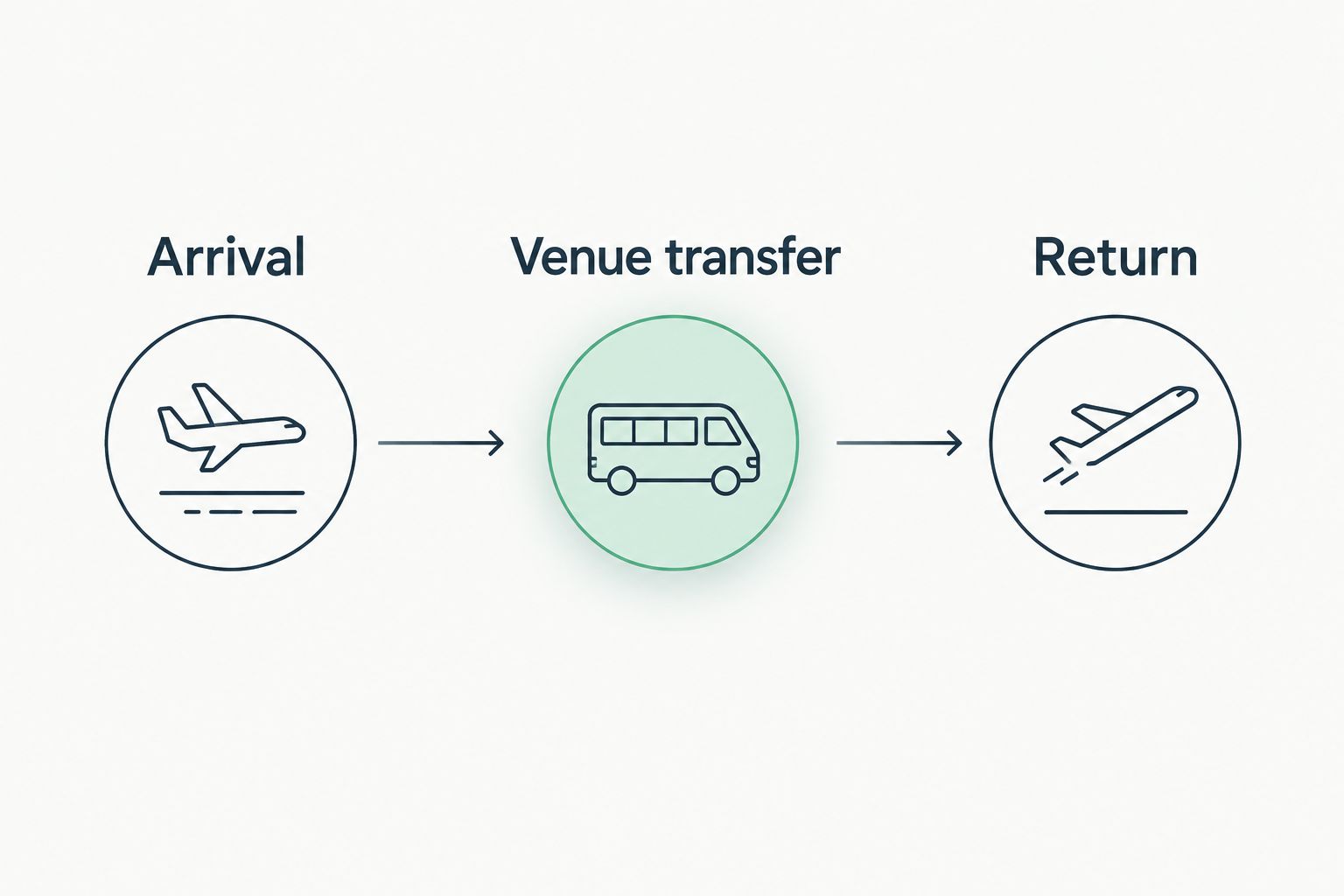
Use 3 checkpoints when reviewing the itinerary: Arrival, Venue transfer, and Return. Each checkpoint needs an owner, a location, and a confirmed instruction. For airport passengers, distinguish flight arrival from the time the passenger is ready to meet the chauffeur.
Check the proposed sequence with both the venue and transportation provider. A hotel departure cannot be approved independently of the destination’s access arrangements, and a return trip needs more than the gala’s published finishing time.
- Confirm the required venue arrival time.
- Have the provider assess the route and departure timing.
- Identify the guest-ready meeting point for airport trips.
- Set a return meeting time and location.
- Record who approves changes to the sequence.
Set the curbside handoff
Ask the venue where the proposed vehicle can load, unload, and wait. Those are separate questions. Permission to discharge passengers near an entrance does not establish permission to remain there during the event.
Walk through the guest experience in plain language: which door to leave, where to stand, whom to contact, and what happens if the vehicle cannot stop at the expected location. Avoid instructions that depend on guests recognizing an unfamiliar vehicle from a distance.
Use a venue coordinator for access questions and the transportation lead for passenger decisions. Your chauffeur should not have to determine whether an absent guest has left independently or is still inside the auction room.
Give passengers a short pickup message rather than the entire event operations document. Keep internal contingency instructions with the staff responsible for acting on them.
- Confirm the exact entrance and pickup point.
- Check vehicle access and waiting arrangements.
- Assign a staff contact for boarding questions.
- Prepare an alternative meeting instruction with the venue.
- Share a concise guest-facing departure message.
Protect accessibility and passenger privacy
Ask guests what assistance or accommodation they require without making assumptions based on age, title, or appearance. Discuss the relevant boarding and equipment requirements with the provider before approving the vehicle.
For your 2026 event, include accessibility in the initial brief rather than treating it as a late addition. If the proposed arrangement does not meet a guest’s needs, resolve the transport plan before sending pickup instructions. Do not label a vehicle accessible without confirmation of the relevant features.
Blacklimoboston offers chauffeur-driven transportation, but the stated service description does not establish the accessibility features of a particular vehicle. Request those details for the proposed booking.
Keep personal information limited to operational need. Your transportation manifest should support the journey, not become a copy of the nonprofit’s donor database.
- Ask guests about relevant boarding requirements.
- Confirm equipment accommodation with the provider.
- Share assistance instructions only with responsible staff.
- Exclude donation records and unrelated personal information.
- Limit manifest access to the people coordinating travel.
Review the written service terms
Compare proposals against the same itinerary and service boundaries. A proposal for a direct transfer is not equivalent to a proposal that includes additional stops or a return movement. Resolve those differences before seeking internal approval.
Ask the provider to explain how itinerary changes, waiting, additional stops, and an extended event are handled. Do not infer terms from a previous booking or from another company’s practices. Your agreement should describe the arrangement you are approving.
For nonprofit governance, separate the decision to fund transportation from the decision about who receives it. Record the event purpose and the approval owner without putting confidential donor assessments into the provider’s paperwork.
Approve the scope before approving the booking. A clear service description gives your event team a reference when the program changes or a passenger requests a different destination.
- Check trip dates, addresses, and passenger groups.
- Confirm every included movement and stop.
- Review cancellation and itinerary-change terms.
- Ask how waiting and event overruns are handled.
- Document the person authorized to approve changes.
Close the loop after the gala
Reconcile completed transportation against the approved plan while event details are still clear. Record missed connections, confusing instructions, boarding difficulties, and requested changes as operational observations—not assumptions about the provider’s performance.
Distinguish a vehicle issue from a planning issue. An unclear pickup message needs a different correction from an unsuitable vehicle configuration. Likewise, an unscheduled guest request should not be recorded as though it were part of the original itinerary.
Save the revised planning template, not an unrestricted copy of every passenger’s information. Follow your organization’s retention requirements for personal data and keep the reusable lessons separate from guest records.
For the next gala, revise the instructions that created friction before repeating the vehicle order. A familiar transportation arrangement still needs review when the venue, passenger group, or program changes.
- Reconcile completed trips with the approved itinerary.
- Record the reason for each operational change.
- Collect feedback from the venue and event lead.
- Update pickup instructions and vehicle requirements.
- Retain passenger information under your organization’s policy.
Compare transportation options for your 2026 gala
Choose the arrangement around the journey, then assess the proposed vehicle. These are planning matches, not claims about a particular vehicle’s passenger capacity or accessibility. Confirm those details with the provider.
| Option | Best for | Main advantage | Key limitation |
|---|---|---|---|
| Chauffeured Sprinter van | Guests sharing pickup points and a common itinerary | Keeps a passenger group on a coordinated movement | Shared departures do not suit conflicting schedules |
| Chauffeured sedan | An individual guest or a small party traveling separately | Separates an individual itinerary from group movements | Not the right category for a larger shared group |
| Chauffeured SUV | A smaller party needing its own itinerary | Provides a separate movement without assigning the main group vehicle | Passenger and luggage fit still require confirmation |
| Chauffeured limousine | Guests requesting a limousine experience | Matches transportation to that specific event preference | The label alone does not establish luggage space or boarding suitability |
A mixed arrangement is appropriate when the requirements genuinely differ. Keep its drawback visible: separate vehicles create more pickup instructions and more movements to coordinate. Choose the simplest arrangement that meets the documented needs, not the largest collection of vehicle types.
Common mistakes nonprofit gala planners make
Treating donor status as a transport requirement
A sponsor table is not automatically a travel group. Guests can have different hotels, airport arrivals, and departure preferences. Group passengers by compatible journeys, then address any hospitality preferences within that workable plan.
Filling seats before checking belongings
A seating request that omits luggage, mobility equipment, or event materials is incomplete. Send the full requirement before approving the proposed configuration. Do not ask guests to resolve a storage problem at boarding.
Planning only for the reception arrival
The return movement needs its own passenger list and pickup instructions. Guests who leave after dinner and guests who stay through the closing program do not necessarily share a workable departure. Confirm preferences rather than assuming everyone returns together.
Letting every staff member direct the chauffeur
Conflicting instructions make the approved itinerary unclear. Route changes through the designated transportation lead, and tell venue staff who holds that role. Give the lead a documented process for approving guest requests.
Assuming luxury means accessibility
A luxury designation does not establish step-free entry or accommodation for a particular mobility device. Describe the guest’s actual requirements and obtain a specific answer. Appearance is not a substitute for vehicle suitability.
FAQ
What is Sprinter van rental for nonprofit galas?
Sprinter van rental for nonprofit galas is group transportation arranged around fundraiser-related journeys. For chauffeur-driven service, your plan should identify passenger groups, pickup locations, required arrival times, and return movements.
Is a Sprinter better than separate cars for gala guests?
A Sprinter fits guests who share a workable itinerary; separate cars fit independent journeys. Compare passenger needs, belongings, pickup locations, and departure preferences before selecting the arrangement.
Does Blacklimoboston provide transportation for nonprofit events?
Blacklimoboston provides chauffeur-driven transportation for special events throughout Boston and New England, including Sprinter vans. Submit your nonprofit gala itinerary for assessment rather than assuming a specific vehicle configuration or service term.
How many guests can travel in a Sprinter for a gala?
Use the passenger capacity confirmed for the specific vehicle proposed for your booking. Also confirm luggage space, boarding requirements, and accommodation for any mobility equipment before assigning guests.
Can gala guests travel directly from the airport?
An airport-to-gala transfer can be included in the transportation request. Provide the flight details, guest-ready meeting requirements, luggage information, and required venue arrival time for the provider to assess.
What should I send when requesting gala transportation?
Send the event date, passenger groups, pickup and destination addresses, required arrival times, and return requirements. Add luggage and accessibility needs, plus the contact authorized to approve changes.
What happens if the gala finishes later than planned?
The written service agreement determines how an extended event is handled. Ask about waiting, schedule changes, and return-trip arrangements before booking, and assign someone to communicate program changes.
One last thing
Send the departure instructions before guests enter the gala. A precise return plan belongs in the guest communication, not only in the event team’s spreadsheet. State the meeting point, departure instruction, and contact for questions without circulating the full manifest.
For a 2026 booking, give Blacklimoboston Sprinter van rental requests the same documented brief you use internally. The final check is simple: can someone who did not write the plan identify where to meet, when to be ready, and whom to contact?